PSA: MLB’s salary cap proposal has nothing to do with eliminating TV blackouts
Tap title to read story
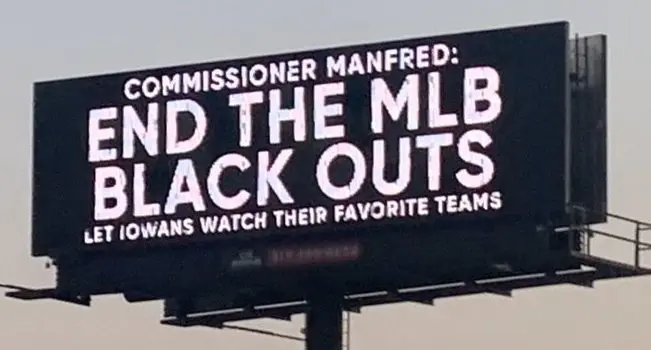
As expected, the early stages of MLB’s impending player lockout this offseason are playing out in the public eye. With the league and players’ union still months away from the prospect of missing games, there’s little incentive for either to budge from their entrenched positions. Instead, now is the time for both sides to gin up public support for their respective goals. And MLB began its public relations campaign in earnest this week by releasing a five-minute video outlining why it sees a salary cap/floor system as being beneficial to the league. Baseball fans have repeatedly told us they have two issues with the game today: blackouts and fairness We’re proposing to make three major changes to baseball: 1. Entering into a partnership with players where all revenues that are generated are split 50/50 between the teams and the players 2. Implementing a salary cap and floor that will regulate what each team can spend 3. Revenues from media generated in baseball are shared equally by the clubs This will reduce the revenue disparity in baseball and help us address local blackouts Major League players’ total compensation would go up and fans would get a more competitive game It’s a win for everybody — MLB (@MLB) November 13, 2026 Earlier this year, MLB went public with its initial proposal to the players . In short, the league’s system would implement a salary cap, which limits how much a team can spend on its roster, and a salary floor, which sets a minimum requirement for how much a team must spend on its roster. In conjunction with the cap/floor system, MLB announced plans to share all media revenue equally among its 30 clubs. As it stands, about half of local media revenue is pooled and split equally, while the other half is kept by the club, rewarding teams with more lucrative media rights agreements. As we’ve explained in prior posts, this proposal essentially amounts to a wealth transfer from high-earning teams like the Los Angeles Dodgers and New York Yankees to lower-earning teams like the Kansas City Royals. The high-earning teams support the effort because a salary-cap system brings cost certainty to their rosters, meaning they won’t be getting into massive bidding wars with other big-spending teams for top players. Additionally, the cost certainty associated with a cap would almost certainly skyrocket franchise valuations for top-crust teams, bringing them in line with other salary-capped leagues like the NBA. In other words, owners of these clubs have a lot to gain from a salary cap, even if they need to sacrifice a bit of local media revenue to make it happen. But something insidious is going on with the league’s messaging about this specific aspect of its proposal. MLB is tying local media revenue sharing to an issue that has frustrated fans for years: TV blackouts. In the league’s video, MLB exec. Morgan Sword claims that the local media revenue sharing “will finally allow us to address local blackouts,” as if the league and its 30 clubs weren’t the very entities that created the blackout model in the first place. For years, individual MLB teams have signed deals with regional sports networks that guarantee those networks exclusivity within their local markets. A Baltimore Orioles fan in Maryland, for instance, would need to subscribe to a cable or satellite service (or more recently, a streamer) to access the team’s local telecasts on MASN. If that fan purchased MLB.tv, the league’s out-of-market package that includes every game across the league, Orioles games would be blacked out. This issue becomes even more problematic in shared markets where multiple teams claim the same territory. A baseball fan in Iowa, for instance, could have as many as six MLB teams blacked out on MLB.tv because half a dozen teams share that territory. Blackouts work the other way, too. Most of MLB’s national media deals, like Sunday Night Baseball on NBC or Fox’s Saturday package, require national exclusivity, meaning those games are no
More context
Timeline
- 2026-11-18 — PSA: MLB’s salary cap proposal has nothing to do with eliminating TV blackouts
Why it matters
Immediate US impact: U.S. readers following Sports news get a clear update on: PSA: MLB’s salary cap proposal has nothing to do with eliminating TV blackouts. Possible long-term US impact: Shapes near-term follow-up coverage and reader understanding of how this story may develop. Most affected groups: General news audiences, people directly named in the reporting, and readers tracking this beat. Reader priority: High for readers already following this storyline; moderate for a general U.S. audience.
Coverage notes
Center: Coverage from NewsRSS/Awful Announcing (rss) frames this as a developing news story: PSA: MLB’s salary cap proposal has nothing to do with eliminating TV blackouts. Reporting emphasizes verified facts, named sources, and near-term impact for readers. Left: Left-leaning desks covering the same development typically emphasize public impact, institutional accountability, and who is most affected. Right: Right-leaning desks covering the same development typically emphasize practical outcomes, market or security stakes, and institutional response.
Primary report
NewsRSS/Awful Announcing (rss) — PSA: MLB’s salary cap proposal has nothing to do with eliminating TV blackouts
Sources
JQJO Editorial Desk · Human reviewed · AI assisted. Report a correction.