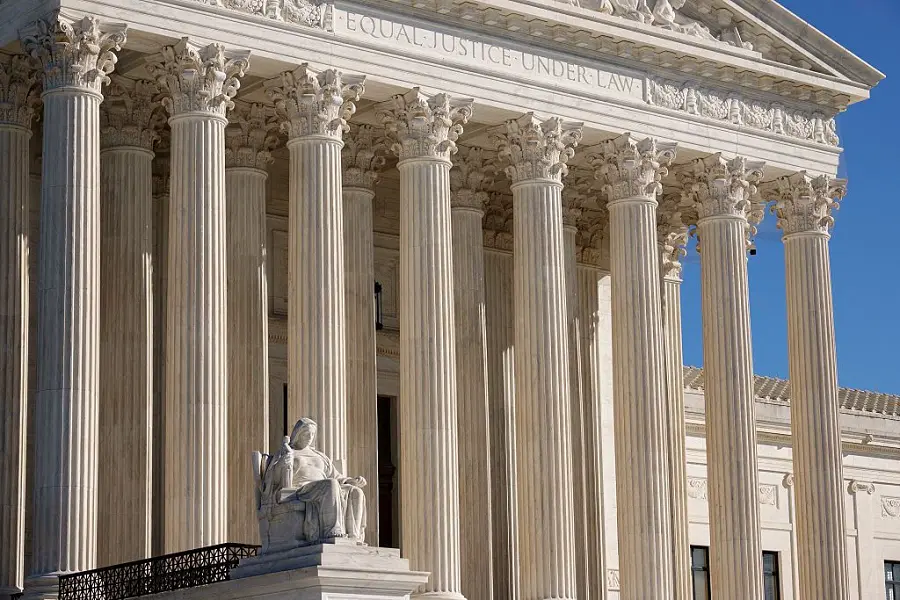
The Supreme Court before it stood apart
Tap title to read story
The Political Supreme Court: A Forgotten History by Rachel A. Shelden (The University of North Carolina Press) *** In her excellent new book, The Political Supreme Court: A Forgotten History , professor Rachel Shelden closes with Chief Justice John Roberts’ insistence that “you don’t want the political branches telling you what the law is,” and that public opinion should not guide the court’s decisions. That will likely sound quite familiar: it is how we have come to think about the Supreme Court. But Shelden’s history shows that the 19th century court and the way Americans perceived it were very different. Indeed, the modern idea of the detached judge, the justice as apolitical “ umpire ,” is not nearly as originalist as we tend to assume. Shelden opens with Abraham Lincoln arguing before the court in 1849. The court that Lincoln and his fellow members of the bar knew was not the marble institution, removed from ordinary political life, that we picture today. For example, the justices “rode circuit.” Each was assigned a region, generally the part of the country from which he hailed and in which he traveled through to preside over federal trial courts. This brought the justices into regular contact with local lawyers, officials, and communities. Shelden calls this “judicial representation”: the idea that a justice would bring a region’s perspective to the court because he knew the people he impliedly represented. Although today’s justices are assigned to a circuit, typically the circuit to which they have ties geographically, the concept is now decidedly different; except at certain prescheduled events, justices no longer directly communicate with the people in that circuit as part of their duties, but handle applications from it in the corridors of the marble palace. “Judicial representation” is most definitely no longer a thing. But this just scratches the surface of the differences that Shelden lays out. In the 19th century, the justices were active participants in the political debates of their time, in ways that today would not only be grounds for profound criticism but even potential impeachment. Chief Justice John Marshall was himself an active participant in such discourse. In 1800, before becoming chief, Marshall began contributing to the Washington Federalist, a newspaper established to support President John Adams and later oppose Thomas Jefferson. Marshall’s involvement was so extensive that he became known as the brains behind the paper. Nor did his appointment to the court entirely sever his connection to it. Elias Caldwell, the Supreme Court’s clerk during Marshall’s tenure, subsequently became its proprietor. The paper remained staunchly Federalist under Caldwell’s leadership, regularly attacking the Jefferson administration’s policies as unconstitutional. Marshall’s political opponents suspected that he continued to exert considerable influence behind the scenes at the Washington Federalist even as chief justice, directing those attacks. Indeed, the Philadelphia Aurora, a newspaper aligned with Jefferson, described Caldwell as “a creature of John Marshall, chief justice.” Shelden casts doubt on Caldwell’s denial of Marshall’s involvement. And given that Caldwell was Marshall’s own clerk at the Supreme Court, you can understand the skepticism. Justice William Johnson provides another example. In 1823, Johnson ruled (in his lower-court circuit-riding role) that South Carolina’s Negro Seamen Act, which authorized the detention of free Black sailors arriving in Charleston, violated the Constitution. Local officials were furious and refused to publish his opinion in the newspapers. So Johnson took his argument directly to the public, putting his opinion in a pamphlet that was circulated around the country, and then supporting the decision via pseudonymously authored op-eds that submitted his interpretation of the Constitution was correct. Nor were the justices’ newspaper writings limited to defending their decision
More context
Timeline
- 2026-11-18 — The Supreme Court before it stood apart
Why it matters
Immediate US impact: U.S. readers following Politics news get a clear update on: The Supreme Court before it stood apart. Possible long-term US impact: Shapes near-term follow-up coverage and reader understanding of how this story may develop. Most affected groups: General news audiences, people directly named in the reporting, and readers tracking this beat. Reader priority: High for readers already following this storyline; moderate for a general U.S. audience.
Coverage notes
Center: Coverage from Esquire, Inc.com, The New York Times frames this as a developing news story: The Supreme Court before it stood apart. Reporting emphasizes verified facts, named sources, and near-term impact for readers. Left: Left-leaning desks covering the same development typically emphasize public impact, institutional accountability, and who is most affected. Right: Right-leaning desks covering the same development typically emphasize practical outcomes, market or security stakes, and institutional response.
Primary report
NewsRSS/SCOTUSblog — The Supreme Court before it stood apart
Sources
- Esquire
- Inc.com
- The New York Times
- Britannica
- Minnesota Lawyer
- CASRAI
- The Indiana Lawyer
- Rhode Island Current
- Thoroughbred Daily News
- Adam Feldman | Substack
- National Association of Attorneys General
- PennLive.com
- Bloomberg Law News
- WHAS11
- 朝日新聞
- The Seattle Times
- New Jersey Monitor
- WQAD
- The Providence Journal
- Newsweek
- the indiana citizen
- weareiowa.com
- Valor International
- Indianapolis Business Journal
- KCRG
- nwitimes.com
- JD Supra
- The Intermountain
- Insideradio.com
- FOX 9 Minneapolis-St. Paul
- The Des Moines Register
- 조선일보
- 2 News Oklahoma KJRH Tulsa
- ESG Dive
- WYFF
- Indiana Public Media
- Ocean State Media
- 90.3 KAZU
- ABC News - Breaking News, Latest News and Videos
- Above the Law
- Bozeman Daily Chronicle
- CNN
- CNS Maryland
- Court Book
- Denver Gazette
- Do No Harm
- ET EnergyWorld
- Eastern Shore Undercover
- First Liberty Institute
- Fisher Phillips LLP
- NewsRSS/SCOTUSblog
JQJO Editorial Desk · Human reviewed · AI assisted. Report a correction.