A genocide the world won’t name is a genocide it won’t stop
Tap title to read story
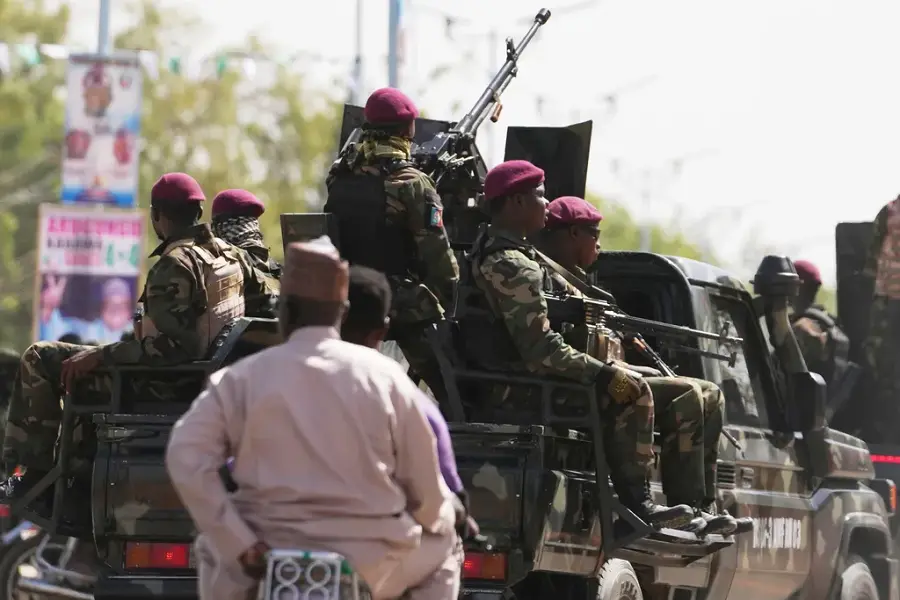
One year ago, the Trump administration named Nigeria a Country of Particular Concern for the persecution of its Christians . This week, the House Foreign Affairs subcommittee on Africa met to ask what that label has actually changed. Rep. Riley Moore (R-WV) of West Virginia gave the plainest answer: success, he said, would mean “a definitive end to the genocidal murder of our brothers and sisters in Christ and the peaceful return of [displaced families] to their ancestral lands. By that measure, Abuja is falling short.” The designation worked as a pressure tool. Nigeria’s government is holding meetings, announcing deployments, and making a handful of arrests. What it is not doing is stopping the killing. Between Jan. 1 and Sept. 8, we documented at least 4,216 Christians who were killed for their faith in Nigeria. That is nearly 17 people killed every day, or one murder every 86 minutes. More than 5 million Christians have been displaced, and more than 1000 Christian communities have been destroyed or emptied. Our recent report, Crisis in the Middle Belt: Religious Persecution and Security Failure in Nigeria , has many more stomach-churning statistics. Too much of our response to Nigeria has become a cycle: an attack, a heartbreaking appeal, a wave of donations, and then the next attack. But relief does not end persecution. It only manages it. IN WAR ON BIBLE, PASTOR CONVICTED FOR PREACHING GOSPEL None of this ends until we are honest about what the violence actually is, and that is where both Washington and the press keep failing. Much of the news coverage still describes “gunmen” and “farmer-herder clashes,” as if burned churches and emptied Christian villages were the product of an argument over grazing land. Land disputes are real, but they do not explain coordinated raids, church burnings, and entire communities driven out. Our reporting points to organized Fulani terror networks, the armed militants and not the Fulani people, along with Boko Haram and the Islamic State West Africa Province. Even independent monitors see the same pattern: Open Doors’ 2026 World Watch List found that Nigeria accounted for more than 70% of Christians killed for their faith worldwide. And even Oge Onubogu — the director of the Africa Program at the Center for Strategic and International Studies, who has warned the subcommittee against reducing the violence to religion alone — acknowledged that recognizing the complexity “does not diminish Christian suffering.” If Washington believes this is a land dispute, it will fund a development program instead of confronting killers who are a threat not just to Nigerian Christians and to democracy, but to the entirety of Western civilized thought and religious freedom. I have been working on the ground in Nigeria since 2011. I have walked through the ruins of burned Christian villages, buried victims of terrorist attacks, comforted widows and orphans, and witnessed firsthand the unimaginable suffering of Christians who have been abandoned by those responsible for protecting them. Our teams can reach an attacked village within a day, but relief has never raised the dead or restored a burned farm. Prevention can. We don’t need another congressional hearing to tell us that Christians are being slaughtered. We need concrete action to stop it. The United States must confront the Islamist Fulani Ethnic Militias responsible for devastating Christian communities across Nigeria’s Middle Belt, hold those enabling these atrocities accountable, and take meaningful steps to ensure Christians can safely return to their ancestral homes. THE DEMOCRATS HAVE A CHRISTIANITY PROBLEM — TRUMP’S GOP IS JUST AS LOST The people who understand this crisis are the ones who have stood alongside its victims, documented the atrocities, identified the perpetrators, and risked their lives to save others. I am calling on President Donald Trump to listen to those of us who have spent years on the front lines of this crisis rather than r
More context
Timeline
- 2026-11-18 — A genocide the world won’t name is a genocide it won’t stop
Why it matters
Immediate US impact: U.S. readers following Politics news get a clear update on: A genocide the world won’t name is a genocide it won’t stop. Possible long-term US impact: Shapes near-term follow-up coverage and reader understanding of how this story may develop. Most affected groups: General news audiences, people directly named in the reporting, and readers tracking this beat. Reader priority: High for readers already following this storyline; moderate for a general U.S. audience.
Coverage notes
Center: Coverage from NewsRSS/Washington Examiner frames this as a developing news story: A genocide the world won’t name is a genocide it won’t stop. Reporting emphasizes verified facts, named sources, and near-term impact for readers. Left: Left-leaning desks covering the same development typically emphasize public impact, institutional accountability, and who is most affected. Right: Right-leaning desks covering the same development typically emphasize practical outcomes, market or security stakes, and institutional response.
Primary report
NewsRSS/Washington Examiner — A genocide the world won’t name is a genocide it won’t stop
Sources
JQJO Editorial Desk · Human reviewed · AI assisted. Report a correction.