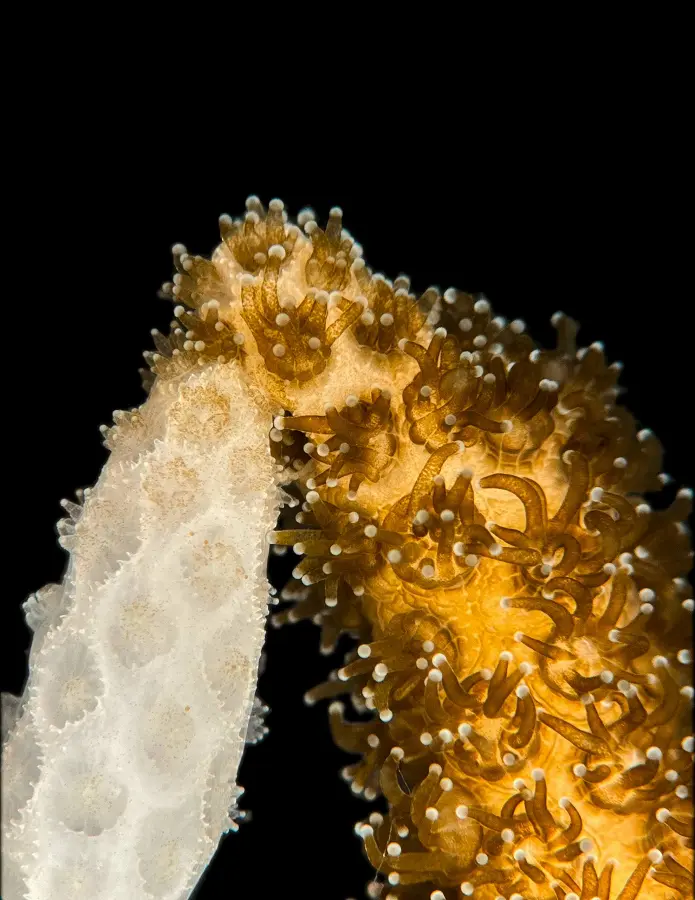
Stanford Discoveries Revive Bleached Coral
Tap title to read story
Stanford researchers have shown that contact with healthy coral can revive bleached coral in as little as eight weeks.
The study, published in Science Advances, demonstrates that healthy coral shares its photosynthetic symbiotic algae with bleached neighbors, triggering rapid recovery. This breakthrough offers hope for reefs that suffered bleaching during the major marine heat wave from January two thousand twenty-three to September two thousand twenty-five, when eighty-four point four percent of global reefs lost coverage.
By restoring algae, bleached corals can regain health faster than natural recolonization, potentially saving millions of dollars in ecosystem services valued at nine point eight trillion dollars annually. The findings could inform scalable restoration strategies, though practical deployment remains to be tested.
More context
Timeline
- 2025-09 — Heat wave ends, reefs still largely bleached
- 2025-10 — Stanford study published, coral recovery demonstrated
Why it matters
Immediate US impact: Potential for reef restoration projects nationwide Possible long-term US impact: Supports coastal protection and tourism economies Most affected groups: Coastal communities and marine biologists Reader priority: Understand scientific breakthrough and practical implications
Coverage notes
Center: Coverage from Gizmodo frames this as a developing news story: Stanford Discoveries Revive Bleached Coral. Reporting emphasizes verified facts, named sources, and near-term impact for readers. Left: Left-leaning desks covering the same development typically emphasize public impact, institutional accountability, and who is most affected. Right: Right-leaning desks covering the same development typically emphasize practical outcomes, market or security stakes, and institutional response.
Primary report
Gizmodo — Stanford Discoveries Revive Bleached Coral
Sources
JQJO Editorial Desk · Human reviewed · AI assisted. Report a correction.