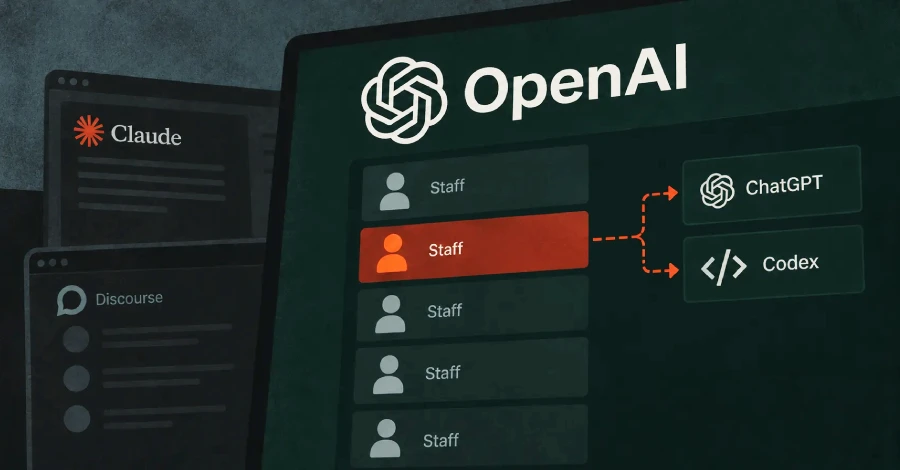
Claude Opus 5 Helped Researchers Take Over OpenAI Staff Accounts via Chained Flaws
Tap title to read story
Security researchers successfully compromised OpenAI internal systems and staff accounts by chaining two critical vulnerabilities with assistance from Anthropic's Claude Opus 5 artificial intelligence model. The operation, conducted in July 2026 and publicly disclosed in September, began at OpenAI's public community forum. Investigators identified an image processing flaw within the server infrastructure, allowing remote code execution after initial failed attempts using older AI software. Upon obtaining server access, researchers exploited single sign on identity overlaps where authentication tokens remained valid across separate corporate applications. This oversight enabled unauthorized control of employee accounts linked to internal code repositories. To prove the impact without accessing sensitive proprietary data, investigators instructed a compromised account to submit a single harmless pull request. OpenAI patched the identity flaw within fourteen hours and awarded a bug bounty. Cybersecurity experts note the incident demonstrates how advanced generative models accelerate complex exploit development cycles across technology sectors nationwide.
More context
Timeline
- 2026-07 — Researchers actively began investigating OpenAI community forum vulnerabilities using software.
- On July 24 2026 Anthropic officially released the advanced Claude Opus five artificial model.
- On July 25 2026 Researchers utilized new model creating working exploit successfully within hours.
- 2026-07 — Investigators exploited single sign on token reuse security vulnerabilities successfully.
- 2026-07 — Compromised staff accounts submitted controlled internal repository pull requests safely.
- 2026-08 — Research team submitted vulnerability report through official bug bounty platforms.
- On September 1 2026 OpenAI awarded research team financial bug bounty compensation payment formally.
- On September 19 2026 Cybersecurity publication disclosed successful artificial intelligence assisted breach details publicly.
- On September 19 2026 Industry engineers evaluated automated threat defense systems and protective protocols.
- On September 20 2026 Security analysts predicted heightened corporate vigilance regarding strict identity management.
Why it matters
Immediate US impact: Major technology firms rushed to audit employee identity management systems. Possible long-term US impact: Advanced artificial intelligence accelerates automated cyberattack capabilities across corporate networks. Most affected groups: Software developers, cybersecurity professionals, and enterprise cloud platform administrators nationwide. Reader priority: Monitor official security advisories regarding generative artificial intelligence exploit developments.
Coverage notes
Left: Emphasizes urgent regulatory oversight regarding corporate artificial intelligence security risks. Center: Reports technical facts regarding vulnerability chaining and bug bounty resolutions. Right: Focuses on technological innovation speed and private enterprise cybersecurity defenses.
Primary report
Researchers utilized advanced artificial intelligence models to compromise OpenAI accounts.
Sources
JQJO Editorial Desk · Human reviewed · AI assisted. Report a correction.