Humans Halted Next Ice Age
Tap title to read story
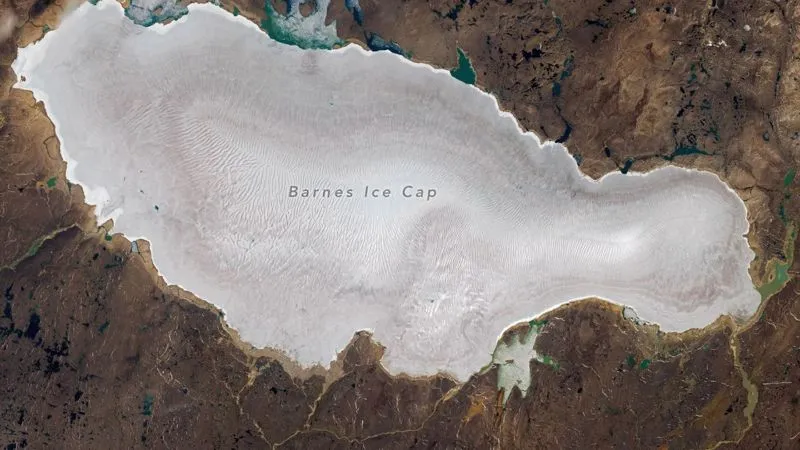
A shrinking ice cap in Arctic Canada shows how burning fossil fuels may have stopped the planet’s next ice age. Around twenty thousand years ago the Laurentide Ice Sheet stretched from the Arctic Circle to Illinois, reaching up to two miles thick. Today only the Barnes Ice Cap on Baffin Island remains. Roughly two thousand years ago the cap began to re‑expand, marking the start of a new glaciation. Around nineteen hundred and sixty, human‑driven warming caused the cap to shrink abruptly, ending the nascent ice age. Scientists used moss and radioactive isotopes to trace the ice’s growth and retreat, confirming the abrupt reversal in the 1960s. The study, published in Science, illustrates how recent emissions have altered Earth’s natural climate cycles.
More context
Timeline
- On January 1 1960 Human‑driven warming caused ice cap to shrink abruptly.
- On January 1 2000 Barnes Ice Cap began to re‑expand, starting new glaciation.
- On October 29 2026 CNN reports on human impact halting next ice age.
Why it matters
Immediate US impact: No direct immediate impact reported in the study Possible long-term US impact: Potential long‑term climate shifts due to altered ice dynamics Most affected groups: Scientists studying glaciation and climate change Reader priority: High for climate scientists and policy makers
Coverage notes
Center: Coverage from yahoo.com, quora.com frames this as a developing news story: Humans Halted Next Ice Age. Reporting emphasizes verified facts, named sources, and near-term impact for readers. Left: Left-leaning desks covering the same development typically emphasize public impact, institutional accountability, and who is most affected. Right: Right-leaning desks covering the same development typically emphasize practical outcomes, market or security stakes, and institutional response.
Primary report
CNN — Humans Halted Next Ice Age
Sources
JQJO Editorial Desk · Human reviewed · AI assisted. Report a correction.