New Zealand Election Leaves Parliament Divided
Tap title to read story
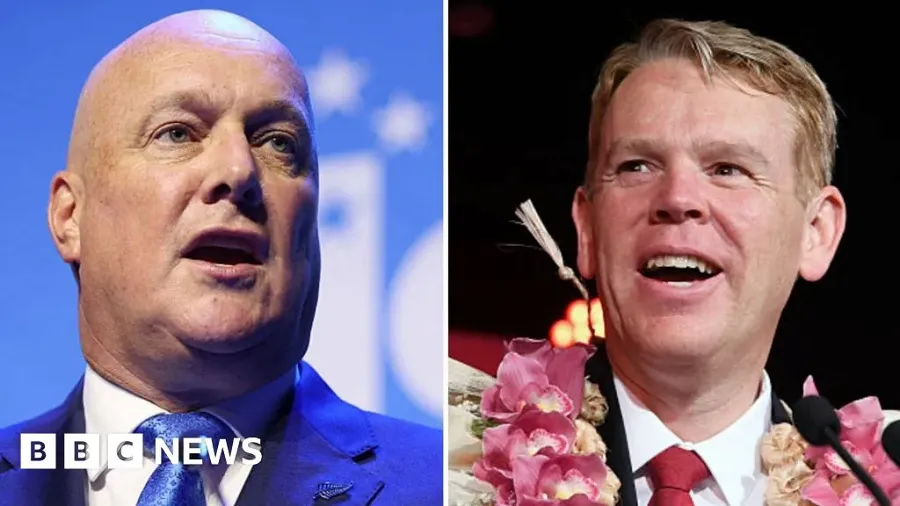
The preliminary results of New Zealand’s election showed no clear winner, with Prime Minister Christopher Luxon’s centre‑right National Party winning 42 seats but 19 short of a simple majority.
Labour leader Chris Hipkins’s party secured 36 seats, and the Greens, ACT, New Zealand First, Opportunity Party and Te Pāti Māori won 16, 13, 12, 7 and 5 seats respectively.
Luxon will run a caretaker government until final counts are confirmed later in the month, after congratulating Hipkins on a “very hard‑fought race.” Hipkins said the next parliament will require compromise and common ground.
More than 99 % of votes have been counted, with National and Labour neck‑and‑neck in vote share, and historically low combined support for the two major parties at around 60 %.
More context
Timeline
- 2026-11-07 — New Zealand Election Leaves Parliament Divided
Why it matters
Immediate US impact: Limited direct impact on U.S. policy, but signals global democratic trends. Possible long-term US impact: May influence U.S. foreign aid priorities toward stable parliamentary systems. Most affected groups: New Zealand voters, political parties, and minority interest groups. Reader priority: Understanding coalition dynamics and potential policy shifts in New Zealand.
Coverage notes
Center: Coverage from the-star.co.ke, wavebrowsernews.com, yahoo.com frames this as a developing news story: New Zealand Election Leaves Parliament Divided. Reporting emphasizes verified facts, named sources, and near-term impact for readers. Left: Left-leaning desks covering the same development typically emphasize public impact, institutional accountability, and who is most affected. Right: Right-leaning desks covering the same development typically emphasize practical outcomes, market or security stakes, and institutional response.
Primary report
BBC — New Zealand Election Leaves Parliament Divided
Sources
JQJO Editorial Desk · Human reviewed · AI assisted. Report a correction.