Science Strengthens Democracy, EU Commissioner Urges
Tap title to read story
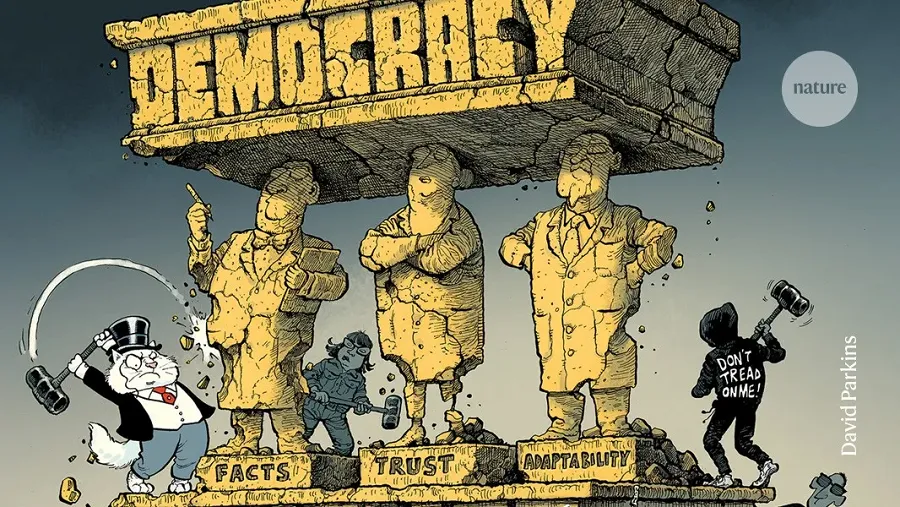
For scientists, democracy feels distant from their work, yet governments worldwide limit academic freedom and influence research funding decisions. Some scientists face politically motivated interference and attacks. The European Commission’s Group of Chief Scientific Advisors, of which many members are scientists, urged action to protect scientific voices. In May, the European Commissioner for Startups, Research and Innovation, requested advice on how science can strengthen the EU’s democratic functioning and resilience. The advisors propose three pillars: establishing shared factual baselines, aiding trust in institutions, and providing tools to adapt policies to changing circumstances. These pillars underscore that science is an essential backbone of democracy, enabling informed decisions and critical enquiry.
More context
Timeline
- On May 1 2023 Commissioner requests science advice for EU democracy.
- On August 1 2023 EU adopts science‑based policy framework for democratic resilience.
Why it matters
Immediate US impact: Science informs policy, enhancing democratic resilience Possible long-term US impact: Long‑term trust in institutions, evidence‑based governance Most affected groups: Academic researchers, policymakers, civil society Reader priority: Understanding science’s role in democratic stability
Coverage notes
Center: Coverage from davissciencesays.ucdavis.edu, oecd.org, beyonddemocracy.net frames this as a developing news story: Science Strengthens Democracy, EU Commissioner Urges. Reporting emphasizes verified facts, named sources, and near-term impact for readers. Left: Left-leaning desks covering the same development typically emphasize public impact, institutional accountability, and who is most affected. Right: Right-leaning desks covering the same development typically emphasize practical outcomes, market or security stakes, and institutional response.
Primary report
Nature — Science Strengthens Democracy, EU Commissioner Urges
Sources
- bostonglobe.com
- macleans.ca
- nytimes.com
- scientificamerican.com
- brennancenter.org
- yahoo.com
- ourworldindata.org
- journalofdemocracy.org
- china.org.cn
- davissciencesays.ucdavis.edu
- oecd.org
- beyonddemocracy.net
- jstor.org
- yntv.cn
- cbc.ca
- law.duke.edu
- csmonitor.com
- theconversation.com
- researchgate.net
- tandfonline.com
- bristoluniversitypressdigital.com
- direct.mit.edu
- nationalcivicleague.org
- sciencedirect.com
- nature.com
- isps.yale.edu
- link.springer.com
- classace.io
- esal.us
- bsg.ox.ac.uk
- vedantu.com
- packard.org
- newsweek.com
- news.asu.edu
- ucs.org
- ox.ac.uk
- arxiv.org
- uio.no
- open.lib.umn.edu
- sociology.institute
- thoughtco.com
- openstax.org
- sir.advancedleadership.harvard.edu
- en.wikipedia.org
- onlinelibrary.wiley.com
- annualreviews.org
- ohchr.org
- preservingdemocracy.com
- ebsco.com
- idea.int
- Nature
JQJO Editorial Desk · Human reviewed · AI assisted. Report a correction.