China s Robots May Decide AI Race
PUBLISHED Oct 12, 2026, 4:39 AM ET
Read, Watch or Listen
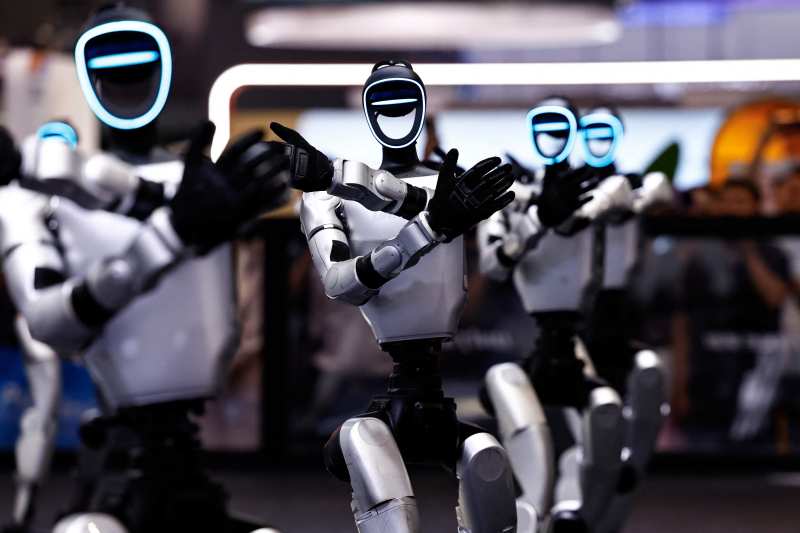
Chinese researchers Scott Singer and Pavlo Zvenyhorodsky argue that AI dominance hinges on combining hardware and software, especially AI‑powered robots. They warn that Washington and Silicon Valley’s focus on software alone risks falling behind. China’s low‑cost, open‑weight AI models are rapidly gaining ground on U.S. rivals such as OpenAI and Anthropic. State‑backed training centers collect real‑world movement data from humans to refine humanoid robots. By 2026, China’s humanoid robots have already outpaced U.S. prototypes in speed and agility, winning world competitions and securing a manufacturing advantage in actuators, sensors, and batteries. The U.S. must now decide whether to double‑down on software or invest in integrated hardware‑software ecosystems to remain competitive.
By Elena V. | JQJO News
Timeline of Events
- On April 7 2026 China’s humanoid robots win world competition.
- On August 23 2026 China trains thousands of humanoid robots.
- On August 27 2026 Chinese manufacturers supply 95 percent of global robots.
News Intelligence
- Immediate US impact: U.S. may shift R&D focus to hardware integration
- Possible long-term US impact: Potential loss of AI leadership if software only
- Most affected groups: Tech firms, AI developers, policymakers
- Reader priority: Understand hardware-software synergy importance
Coverage of Story:
From Left
No left-leaning sources found for this story.
From Right
No right-leaning sources found for this story.






Comments