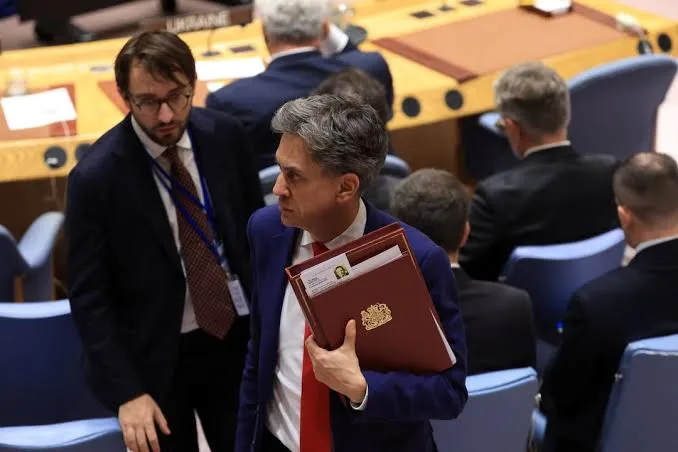
Britain warns Iran it will not tolerate hostile activity on UK soil
Tap title to read story
British Foreign Secretary Ed Miliband issued a stern warning to Iranian Foreign Minister Abbas Araghchi during United Nations General Assembly talks in New York, declaring that the United Kingdom will not tolerate intimidation or hostile operations on British soil. The bilateral discussion addressed escalating Middle East tensions, the urgent need for diplomatic de-escalation, and maritime security measures required to reopen the Strait of Hormuz for global shipping lanes. Furthermore, British officials raised mounting security concerns regarding state-sponsored spear-phishing cyber campaigns using CHOSEN BRICK spyware, threats directed at the British Jewish community, and ongoing demands for the immediate release of a detained British couple held in Tehran. Both governments maintained divergent diplomatic positions while addressing critical regional security risks. The meeting highlighted persistent friction between London and Tehran across international maritime, cyber security, and consular disputes.
More context
Timeline
- On September 24 2026 British and Iranian foreign ministers met at United Nations headquarters.
- On September 23 2026 UK intelligence agencies highlighted ongoing state-backed cyber espionage threats.
- On September 20 2026 International diplomats prepared frameworks for Middle Eastern maritime de-escalation talks.
- On August 15 2026 Family members appealed for detained British citizens held inside Iran.
- On July 10 2026 Security analysts traced CHOSEN BRICK spyware campaigns to foreign actors.
- On June 1 2026 Strait of Hormuz shipping disruptions prompted emergency international maritime warnings.
- On May 12 2026 London police increased community protection measures amid rising domestic threats.
- On April 5 2026 Diplomatic channels between European nations and Tehran experienced severe strain.
- On March 18 2026 Bilateral talks regarding consular detainees stalled in regional transit capitals.
- On February 14 2026 Cyber security firms published threat intelligence reports on targeted espionage.
- Diplomats expect further bilateral friction regarding regional security and detained nationals.
- International monitors anticipate continued diplomatic efforts to secure maritime shipping routes.
Why it matters
Immediate US impact: Heightened cybersecurity alerts and diplomatic friction affect US foreign policy. Possible long-term US impact: Ongoing Middle Eastern maritime instability increases long-term global energy costs. Most affected groups: National security agencies, diplomatic corps, and international trade corporations are affected. Reader priority: Readers should monitor verified government announcements and major wire services.
Coverage notes
Left: Emphasizes diplomatic resolution, humanitarian concerns, and international law compliance. Center: Reports official statements neutrally without taking partisan policy positions. Right: Emphasizes national security firmness, deterrence, and robust defense measures.
Primary report
British Foreign Secretary warned Iran against hostile activity on UK soil.
Sources
JQJO Editorial Desk · Human reviewed · AI assisted. Report a correction.