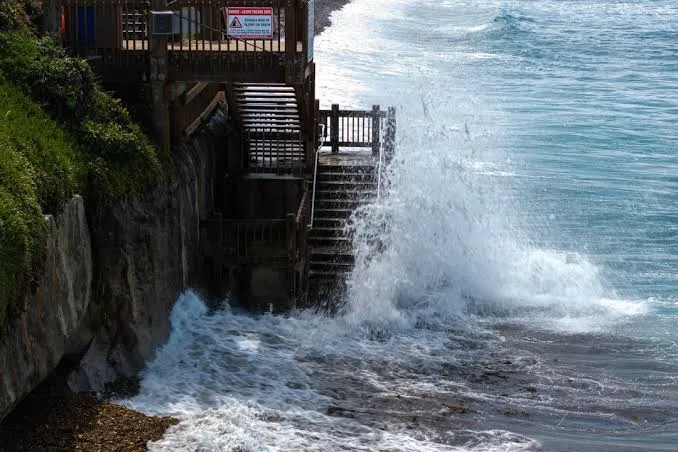
Rising sea destroys homes, erases beaches in California. Is worse to come?
Tap title to read story
California faces severe coastal destruction as rising sea levels, El Niño conditions, and incoming Kelvin waves threaten shorelines with extreme erosion and flooding. Experts warn that ferocious waves could coincide with seasonal king tides, amplifying risks across coastal communities. In Carlsbad, sand rapidly vanished from Tamarack Beach, exposing cobblestones and threatening local tourism tax revenues. State officials declared an emergency to mobilize disaster relief ahead of winter hazards. Scientists note that while coastal erosion is a natural millennia-old process, human infrastructure built directly within hazardous zones exacerbates the damage. The convergence of multiple weather and oceanic cycles creates unprecedented pressure on municipal infrastructure and coastal real estate throughout Southern California. Researchers and local authorities continue evaluating mitigation options, including beach nourishment and property hardening, as communities brace for heightened storm surges and further shoreline loss in the coming months.
More context
Timeline
- On June 2023 El Niño officially emerged across the tropical Pacific Ocean.
- On Sept 2023 Hurricane Marie caused severe storm surf in Southern California.
- On Oct 2023 First major Kelvin wave reached the California coastline.
- On Dec 2023 State of emergency was declared for California winter storms.
- On Jan 2024 Extreme king tides amplified coastal flooding in California.
- On Feb 2024 Atmospheric rivers brought massive rainstorms and severe erosion.
- On Mar 2024 Carlsbad officials assessed extensive sand loss at Tamarack Beach.
- On Apr 2024 Researchers documented severe cobblestone exposure along Southern beaches.
- On May 2024 Municipalities evaluated long-term coastal hardening and dune restoration.
- On Sep 2026 Experts warn of upcoming winter weather cycle hazards.
Why it matters
Immediate US impact: Federal emergency disaster relief deployment across vulnerable California coastal zones. Possible long-term US impact: Nationwide revision of coastal infrastructure development and zoning policies. Most affected groups: Southern California coastal residents, tourism businesses, and municipal agencies. Reader priority: Official updates from NOAA, National Weather Service, and local emergency departments.
Coverage notes
Left: Emphasizes climate change urgency and government disaster response funding. Center: Reports factual scientific warnings regarding weather convergence and infrastructure risks. Right: Focuses on local economic impacts and property protection costs.
Primary report
Reuters published investigation on California coastal erosion and El Nino.
Sources
- San Francisco Chronicle
- NBC News
- Politico
- The Atlantic
- Sacramento Bee
- San Francisco Examiner
- Reuters
- Associated Press
- Wall Street Journal
- Bloomberg
- The Hill
- USA Today
- NPR
- Time
- AccuWeather
- Forbes
- Fresno Bee
- The Desert Sun
- Bakersfield Californian
- Ventura County Star
- The Bakersfield Californian
- The Napa Valley Register
- The Record
- Modesto Bee
- The Tribune
- The Californian
- Santa Maria Times
- Lompoc Record
- The Desert Dispatch
- The Union
- Sierra Star
- The Lassen County Times
- Redding Record Searchlight
- Chico Enterprise-Record
- National Review
- The Daily Wire
- The Daily Caller
- Washington Times
- Newsmax
JQJO Editorial Desk · Human reviewed · AI assisted. Report a correction.