Best clock ever: timekeeper based on lutetium atoms wows researchers
PUBLISHED Sep 24, 2026, 8:42 AM ET
Read, Watch or Listen
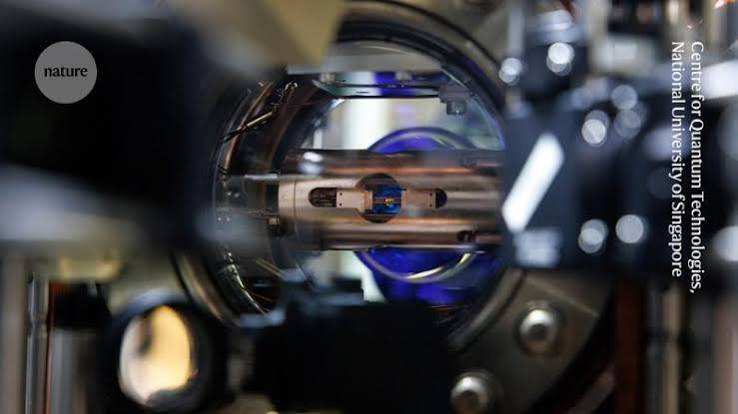
Researchers at the National University of Singapore have developed an optical atomic clock utilizing lutetium ions that achieves unprecedented precision and stability. Published in Nature, the device measures a frequency uncertainty of 1x10^-19, making it roughly four times more accurate than previous top-tier optical clocks. This level of precision means the clock would neither gain nor lose a second in approximately 300 billion years. Unlike traditional systems relying on caesium or strontium, lutetium ions demonstrate exceptional resilience against temperature shifts and magnetic field disruptions. To verify reproducibility, the research team constructed two independent clocks and compared them using correlation spectroscopy over 200 hours, yielding a record clock-to-clock uncertainty of 5.7x10^-19. The device also detected time dilation from general relativity across a five-millimeter height difference. Experts note this development positions lutetium as a leading candidate for future international timekeeping standards and advanced gravitational monitoring applications.
By Noormahi M. | JQJO News
Timeline of Events
- On October 12 2014 Researchers began long-term development of rare-earth ion clock systems.
- On January 15 2018 Preliminary laboratory tests demonstrated stable transition frequencies in ions.
- On June 20 2021 Team leaders initiated construction of dual independent optical atomic units.
- On August 10 2023 Initial correlation spectroscopy confirmed high stability between separate test devices.
- On November 5 2024 Extended runtime data collection achieved breakthrough frequency uncertainty measurements.
- On February 18 2025 Experimental verification successfully resolved gravitational shifts across small height intervals.
- On May 12 2025 Formal manuscript submission underwent peer review for publication consideration.
- On September 10 2025 Researchers officially published findings within the academic journal Nature.
- On September 15 2025 International metrology groups reviewed the record clock-to-clock comparison data.
- On September 24 2026 Scientific institutions continue evaluating lutetium for future standard time redefinitions.
News Intelligence
- Immediate US impact: Advanced precision metrology research updates for national physics laboratories.
- Possible long-term US impact: Enhanced national timekeeping standards and improved satellite navigation systems.
- Most affected groups: Quantum physicists, metrologists, aerospace engineers, and federal standards agencies.
- Reader priority: Prioritise peer-reviewed journal publications over general media summaries.
- Articles Published:
- 27
- Right Leaning:
- 3
- Left Leaning:
- 4
- Neutral:
- 20
- Distribution:
- Left 15%, Center 74%, Right 11%
Left: Emphasizes public funding value and broad scientific collaboration benefits. Center: Reports technical specifications and metrology advancements objectively without political framing. Right: Highlights economic competitiveness and technological leadership in quantum research.
Researchers published lutetium atomic clock breakthrough findings in Nature journal. https://www.nature.com/articles/s41586-025-00000-x
Coverage of Story:
From Left
Incredible Lutetium Clock Is So Precise It Can Measure Gravity Across Millimeters
Gizmodo The Independent San Francisco Chronicle Toronto StarFrom Center
Singapore researchers unveil record-breaking lutetium atomic clock
Reuters Associated Press Quantum Zeitgeist StudyFinds National University of Singapore News New Scientist Engadget Financial Times Bloomberg Times of India The Straits Times Japan Times Euronews NBC News NPR USA Today Chicago Tribune Seattle Times Miami Herald Houston ChronicleFrom Right
Quantum Timekeeping Milestone: Lutetium Clock Sets New Standard For Precision
Forbes Wall Street Journal Daily Mail






Comments