Major US airlines oppose Air China bid to schedule additional US flights
Tap title to read story
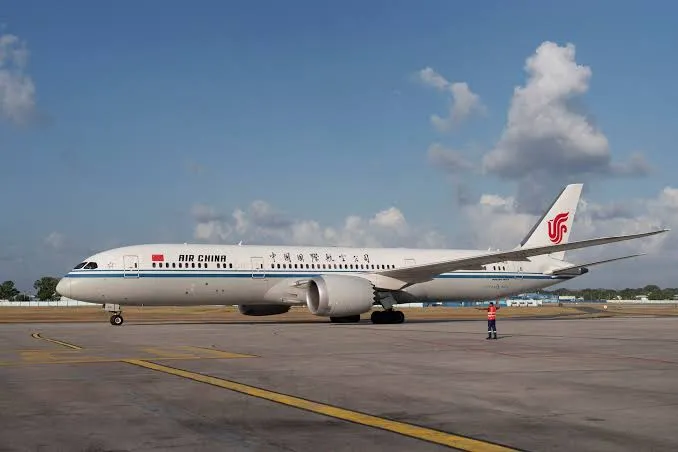
Major U.S. airlines, through their trade group Airlines for America, have formally opposed Air China's request to schedule additional flights connecting Beijing to New York and Washington. The primary objection centers on an uneven competitive landscape: while U.S. carriers are effectively barred from using Russian airspace due to sanctions following the invasion of Ukraine, Chinese carriers face no such restrictions on certain U.S. routes. This allows Chinese airlines to operate significantly shorter, faster, and more fuel-efficient paths, prompting U.S. carriers to urge the government to halt further expansions until fair, equal market access is guaranteed. The trade group filed its formal opposition on Friday, intensifying transpacific aviation tensions as officials navigate complex bilateral route caps. U.S. legacy carriers argue that granting further permissions without resolving the airspace discrepancy distorts the market and harms domestic airline competitiveness. Neither the U.S. Department of Transportation nor Air China's legal representatives have issued an immediate comment on the latest filing.
More context
Timeline
- On March 1, 2022, the United States banned Russian aircraft from domestic airspace.
- On October 9, 2025, the U.S. Department of Transportation proposed banning Chinese overflights.
- On October 14, 2025, the U.S. Department of Transportation denied Air China motion.
- On February 27, 2024, the Department of Transportation expanded weekly round-trip flight caps.
- On September 18, 2026, Airlines for America formally opposed Air China flight expansion.
- On September 18, 2026, major U.S. news outlets reported on the trade group filing.
- On September 18, 2026, industry analysts noted wider geopolitical implications ahead of bilateral talks.
- On September 24, 2026, scheduled presidential summit discussions between the U.S. and China approach.
- Coming months could bring formal regulatory decisions from the Transportation Department regarding expansion requests.
- Coming years may reshape transpacific aviation frameworks based on reciprocal airspace access agreements.
Why it matters
Immediate US impact: Highlights trade frictions and regulatory uncertainty for transpacific travel. Possible long-term US impact: May permanently reshape bilateral aviation agreements and competitive market shares. Most affected groups: U.S. legacy carriers, Air China, transpacific travelers, and regulatory bodies. Reader priority: Monitor Department of Transportation announcements and upcoming bilateral trade discussions closely.
Coverage notes
Left: Emphasizes corporate fairness and the necessity of leveled international competition. Center: Reports regulatory filings neutrally, focusing on operational discrepancies and airspace rules. Right: Focuses on national security implications and geopolitical leverage against foreign adversaries.
Primary report
Airlines for America filed opposition against Air China expansion on September 18, 2026.
Sources
- Politico
- The Washington Post
- The New York Times
- San Francisco Chronicle
- The Atlantic
- Reuters
- Devdiscourse
- Traders Union
- AeroXplorer
- Fidelity News
- Yahoo Malaysia
- Devdiscourse Global
- Devdiscourse Sports
- Devdiscourse Special
- Investing Market News
- Reuters Aerospace
- Simple Flying
- Bloomberg
- Financial Times
- Associated Press
- The Hill
- Travel Weekly
- FlightGlobal
- Seattle Times
- Chicago Tribune
- Dallas Morning News
- Miami Herald
- Houston Chronicle
- Quartz
- Forbes
- Inc.
- Wall Street Journal
- Newsmax
- Daily Wire
JQJO Editorial Desk · Human reviewed · AI assisted. Report a correction.