Blue Origin Expands Pad After Explosion
PUBLISHED Aug 17, 2026, 7:10 AM ET
Read, Watch or Listen
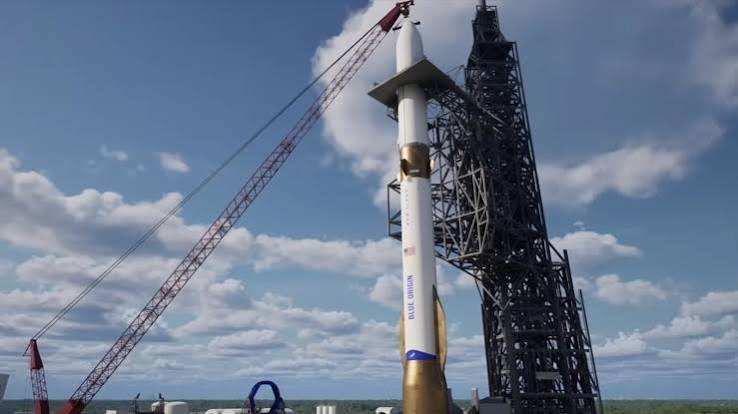
Blue Origin is adding a second launch pad to its Cape Canaveral complex while simultaneously repairing damage from a recent rocket explosion. The facility adjustments follow the failure of a New Glenn 7x2 rocket during static fire tests at Launch Complex-36 in May. Blue Origin CEO Dave Limp confirmed that rebuilding LC-36A remains the primary priority to ensure the New Glenn rocket flies before the end of the year. Alongside the ongoing repairs, a separate team has initiated construction on LC-36B. The new operational pad will support the larger New Glenn 9x4 configuration. The expansion project requires sourcing 2,500 tons of steel, a significant portion of which will construct a 700-foot-tall launch tower. The initial New Glenn first stage relies on seven BE-4 engines, while the second stage utilizes two BE-3Us, and both are engineered for vertical landing and reusability. The upcoming 9x4 version will upgrade to nine BE-4 engines on the first stage and four BE-3Us on the second stage to handle heavier payloads. The May explosion reduced Blue Origin's scheduled 2026 launch manifest from up to twelve missions down to a single planned flight.
By Michael Grant | JQJO News
Timeline of Events
- On May 28, 2026, a New Glenn rocket exploded during static fire tests.
- On June 4, 2026, initial mishap investigations began across federal space installations.
- On August 5, 2026, Blue Origin published hotfire anomaly investigation updates.
- On August 6, 2026, executives identified the BE-4 main oxygen valve failure.
- On August 12, 2026, Blue Origin formally commenced construction on Launch Complex 36B.
- On August 17, 2026, official site expansion details and steel requirements were disclosed.
- On September 30, 2026, updated hardware retrofits for BE-4 engines are expected.
- On December 31, 2026, Blue Origin targets its revised commercial return-to-flight window.
- On March 31, 2027, serial number one vehicle preparations are projected for completion.
- On December 31, 2027, expanded 9x4 configuration testing phases will likely conclude.
News Intelligence
- Immediate US impact: Accelerates commercial heavy-lift infrastructure development across Florida space corridors.
- Possible long-term US impact: Establishes redundant launch capabilities for long-term orbital payload delivery.
- Affected Groups: Aerospace contractors, Florida technicians, and commercial satellite operators face scheduling shifts.
- Priorities: Monitor primary company briefings, aerospace industry trackers, and federal filings.
- Articles Published:
- 20
- Right Leaning:
- 1
- Left Leaning:
- 3
- Neutral:
- 16
- Distribution:
- Left 15%, Center 80%, Right 5%
Left: Emphasizes corporate infrastructure spending and regulatory oversight of aerospace operations. Center: Focuses strictly on technical timelines, engineering upgrades, and launch manifest changes. Right: Highlights private enterprise resilience, technological scaling, and domestic space leadership advancements.
Blue Origin announces construction of LC-36B pad during site repairs on August 17, 2026. https://www.space.com/space-exploration/launches-spacecraft/blue-origin-adding-second-pad-to-cape-canaveral-launch-complex-amid-rocket-explosion-repairs
Coverage of Story:
From Left
Blue Origin is building a second New Glenn pad after its massive rocket explosion
The Verge CNN Washington PostFrom Center
Blue Origin Expands Pad After Explosion
Space Space.com Universe Today Autoevolution NASASpaceflight Spaceflight Now Ars Technica CNBC Reuters Bloomberg TechCrunch Wall Street Journal Aviation Week Florida Today Orlando Sentinel WiredFrom Right
Blue Origin pushes forward with commercial rocket infrastructure after setback
Fox Business




Comments