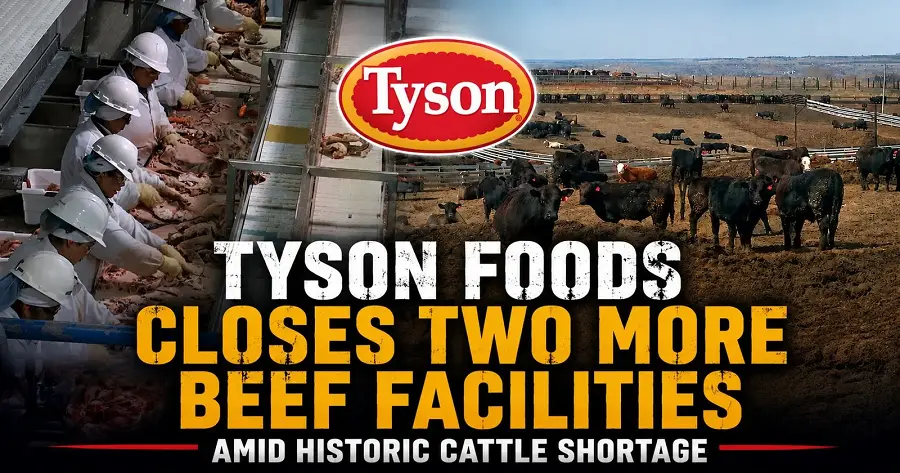
Tyson Foods Shuts Down Plants, Cuts 3,200 Jobs Amid Historic Cattle Shortage
Tap title to read story
Tyson Foods will close beef facilities in Illinois and Utah and pursue a sale of its Washington beef plant, restructuring operations as a prolonged U.S. cattle shortage squeezes meatpackers. The company announced the changes Aug. 13, saying Joslin, Illinois, and Eagle Mountain, Utah, would close, while Pasco, Washington, would be offered for sale. Tyson plans to concentrate beef operations around facilities in Dakota City, Nebraska; Holcomb, Kansas; and Amarillo, Texas. Reuters reported the moves could affect more than 3,000 jobs, with the Joslin closure accounting for roughly 2,500 positions and Eagle Mountain for more than 700. Tyson said cattle supplies are historically tight and that the changes will create a more competitive operating footprint while maintaining similar harvesting levels through remaining plants. The restructuring follows Tyson's earlier Lexington, Nebraska, closure. The company expects a 2026 beef operating loss of up to $650 million.
More context
Timeline
- November 21, 2025 — On November 21, 2025 Tyson announced Lexington closure and Amarillo shift reductions.
- January 23, 2026 — On January 23, 2026 Tyson briefly retained limited Lexington beef operations.
- May 13, 2026 — On May 13, 2026 Tyson warned cattle rebuilding efforts remained uneven nationwide.
- August 13, 2026 — On August 13, 2026 Tyson announced closures affecting Illinois and Utah facilities.
- August 13, 2026 — On August 13, 2026 Tyson also announced plans to sell Pasco, Washington facility.
- August 14, 2026 — On August 14, 2026 coverage detailed Tyson's consolidation around three central plants.
- August 14, 2026 — On August 14, 2026 reports highlighted continuing cattle shortages and mounting beef losses.
- August 17, 2026 — On August 17, 2026 national coverage emphasized historically low cattle inventories and prices.
- Future — Over coming weeks, affected workers will seek transfers or replacement employment.
- Future — Over coming months, Tyson will consolidate production across remaining beef facilities.
- Future — Over coming months, Amarillo could restore another shift as cattle availability improves.
- Future — Over coming years, herd rebuilding could gradually ease processor supply constraints.
- Future — Over coming years, beef prices may remain elevated while supplies recover.
Why it matters
Immediate US impact: Thousands lose jobs while regional cattle markets face reduced processing capacity. Possible long-term US impact: Consolidation may improve processor efficiency while beef supplies remain constrained. Reader priority: Prioritize company releases, USDA data, local reporting, and verified worker statements. Most Affected: Workers, cattle producers, rural communities, processors, retailers, and beef consumers.
Coverage notes
Left: Coverage emphasizes worker losses, rural hardship, and corporate consolidation pressures. Center: Coverage emphasizes cattle scarcity, Tyson losses, closures, and operational consolidation. Right: Coverage emphasizes food prices, cattle shortages, business losses, and supply constraints.
Primary report
August 13, 2026 Tyson announced strategic beef network closures and sale.
Sources
- Reuters
- The Wall Street Journal
- The Wall Street Journal
- Barron's
- Houston Chronicle
- Talk Business & Politics
- 5NEWS
- Drovers
- American Ag Network
- Hoosier Ag Today
- Agriculture.com
- Agriculture.com
- SAN
- StockTitan
- The Journal Record
- Food Engineering
- Kutv
- Abc4
- Pjstar
- Nbcchicago
- Chicagotribune
- Ksl
- Fox13now
- Fooddive
- FOX Business
- New York Post
- Manufacturing.net
JQJO Editorial Desk · Human reviewed · AI assisted. Report a correction.