California launches SpaceX Falcon 9 with 81 satellites
Read, Watch or Listen
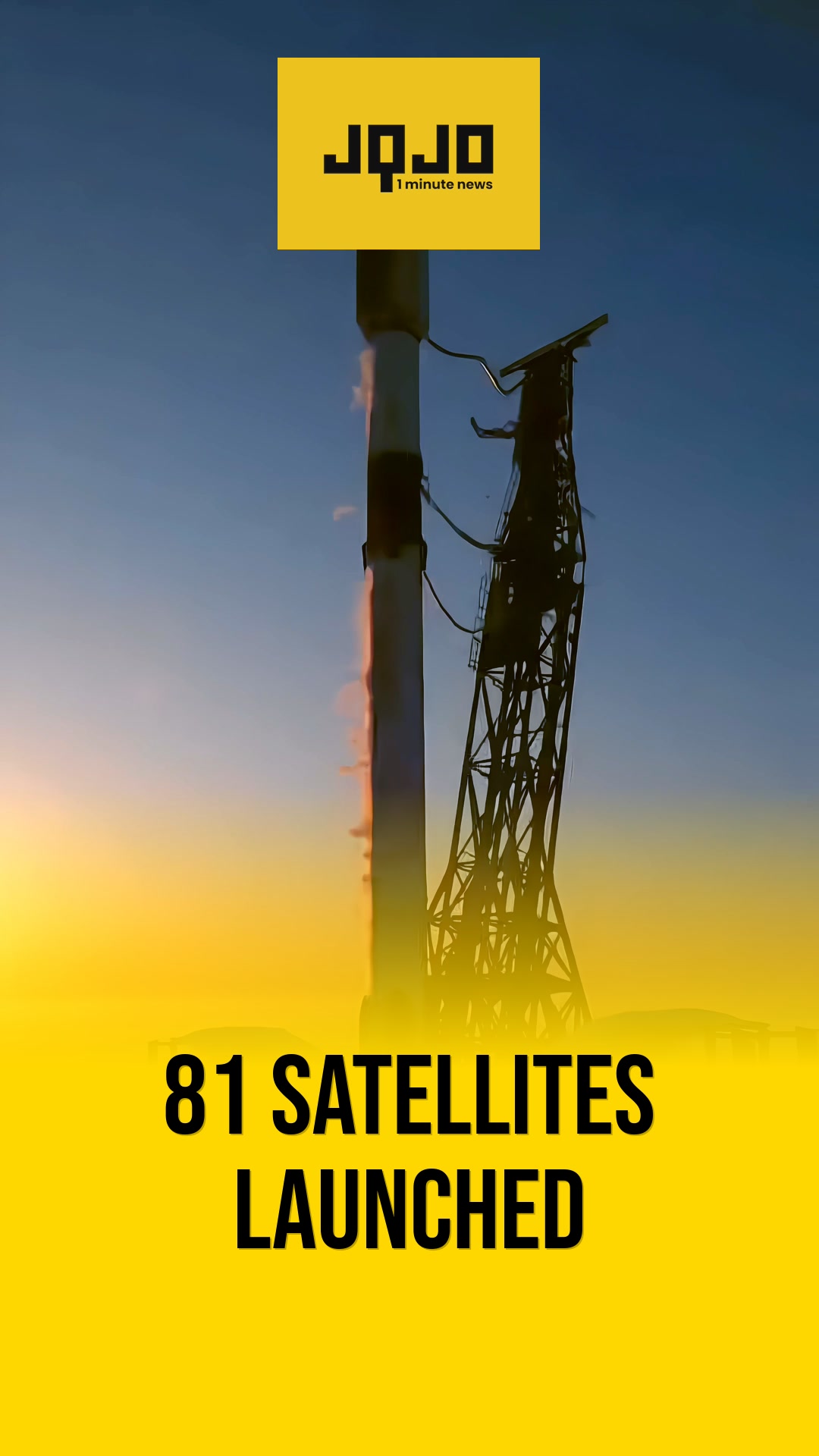
VANDENBERG SPACE FORCE BASE, California — SpaceX launched a Falcon 9 rocket early Tuesday, sending 81 payloads to orbit on its Transporter-17 rideshare mission from Vandenberg Space Force Base during a 95-minute window that opened at 3:10 a.m. EDT. The mission carried a mix of cubesats, microsats, hosted payloads, and several orbital transfer vehicles, which will later release eight additional payloads into their own orbits. The largest spacecraft on board was CAS500-4, a roughly 500-kilogram South Korean Earth-observation satellite that will become the fourth member of a planned five-satellite CAS500 constellation in low Earth orbit. The CAS500-4 satellite is designed to support the South Korean government’s efforts to monitor crops and forests, adding to the country’s capacity for environmental and resource management from space. About 8.5 minutes after liftoff, the Falcon 9 first stage completed its 11th flight by landing on the droneship "Of Course I Still Love You" in the Pacific Ocean. SpaceX’s Transporter rideshare program has now flown 20 missions and delivered more than 1,800 payloads to orbit. The series began with Transporter-1 in January 2021, which set a record for the most satellites launched on a single rocket with 143 payloads.
Prepared by Olivia Bennett and reviewed by editorial team.
Timeline of Events
- January 2021 Transporter-1 launches 143 satellites
- By 2024 Transporter program reaches 20 missions
- Early Tuesday Falcon 9 lifts off Vandenberg
- Early Tuesday 81 payloads deployed toward orbit
- Early Tuesday CAS500-4 rides as primary payload
- About 8.5 minutes later booster lands on droneship
- After launch orbital transfer vehicles begin deployments
Why This Matters to You
SpaceX's Transporter program is revolutionizing space access. It's making it cheaper and easier to launch satellites that monitor our environment, improve communication, and advance scientific research. If you're interested in space, technology, or environmental management, keep an eye on these missions.
The Bottom Line
SpaceX continues to push boundaries in space exploration and satellite deployment. Their successful launch of 81 payloads, including a South Korean Earth-observation satellite, is a testament to their innovation. Worth forwarding if you know someone fascinated by space technology.
Coverage of Story:
From Left
No left-leaning sources found for this story.
From Right
No right-leaning sources found for this story.




Comments