Tiny Creatures Inside Deep‑Sea Nodules
Tap title to read story
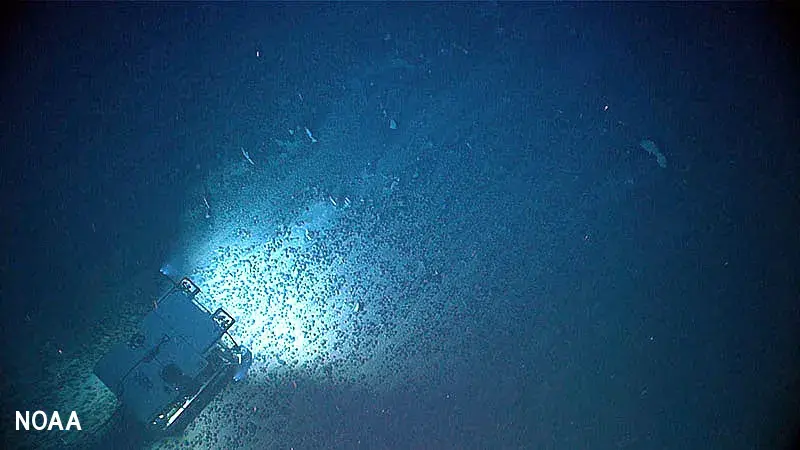
Scientists from the University of Bremen’s MARUM centre and the Royal Netherlands Institute for Sea Research examined 244 polymetallic nodules in the Clarion‑Clipperton Zone.
They counted 4,139 animals smaller than a millimetre, averaging 17 per nodule, with one nodule holding 245.
The nodules, which grow only a few millimetres every million years, lie 4,000 to 6,000 metres below the ocean surface.
Dr Coral Diaz‑Recio Lorenzo said the crevices act as shelters for species not found in soft‑sediment habitats.
Professor Sabine Gollner warned that commercial mining could irreversibly destroy this unique, undescribed biodiversity.
The United States has applied for a commercial mining permit; the National Oceanic and Atmospheric Administration is reviewing the application, while the International Seabed Authority has delayed rule‑making.
More context
Timeline
- 2026-11-15 — Tiny Creatures Inside Deep‑Sea Nodules
Why it matters
Immediate US impact: US mining permit application may threaten deep‑sea ecosystems Possible long-term US impact: Potential loss of unique marine biodiversity could affect global ecological balance Most affected groups: Marine biologists, conservationists, and deep‑sea mining stakeholders Reader priority: Understanding ecological risks of deep‑sea mining
Coverage notes
Center: Coverage from Nature Today, nioz.nl, Reuters frames this as a developing news story: Tiny Creatures Inside Deep‑Sea Nodules. Reporting emphasizes verified facts, named sources, and near-term impact for readers. Left: Left-leaning desks covering the same development typically emphasize public impact, institutional accountability, and who is most affected. Right: Right-leaning desks covering the same development typically emphasize practical outcomes, market or security stakes, and institutional response.
Primary report
Oceanographic Magazine — Tiny Creatures Inside Deep‑Sea Nodules
Sources
JQJO Editorial Desk · Human reviewed · AI assisted. Report a correction.