Universe Age Doubled, Dark Matter Reconsidered
Tap title to read story
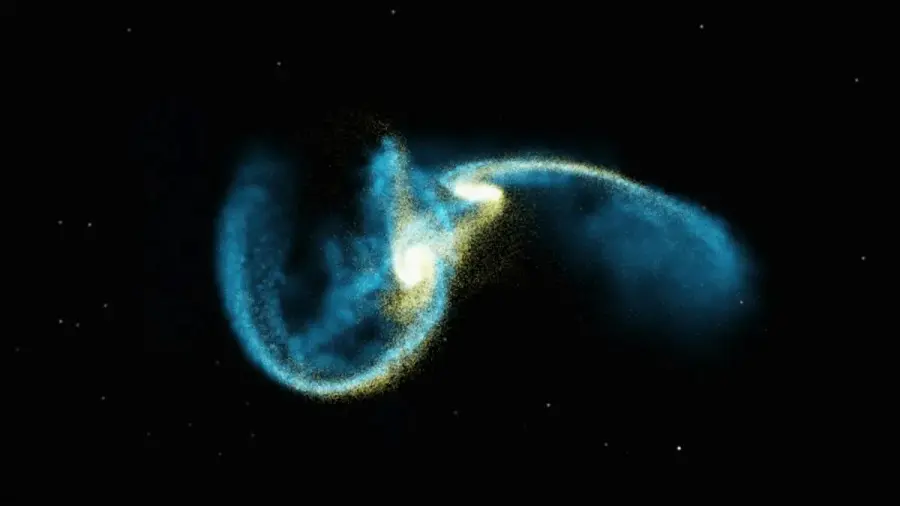
A University of Ottawa researcher, Rajendra Gupta, and postdoctoral researcher Nikolaos Samaras claim that the universe could be 26.7 billion years old, almost twice the age usually accepted by scientists.
Their model, called CCC+TL (Covarying Coupling Constants plus Tired Light), modifies gravity and cosmic expansion by allowing physical constants to shift slowly over time and by proposing that light loses energy as it travels, which would make distant light take longer to reach us.
In computer simulations, the model accurately predicts the observed abundance of hydrogen and helium from the Big Bang and matches the universe’s historical expansion rate without invoking dark energy.
More context
Timeline
- On July 13 2023 Researcher proposes universe twice as old theory.
Why it matters
Immediate US impact: Scientists challenge prevailing cosmological models, sparking debate Possible long-term US impact: Potential shift in astrophysics research funding and priorities Most affected groups: Astrophysicists, cosmologists, science educators Reader priority: High interest for science enthusiasts and academics
Coverage notes
Center: Coverage from sciencedaily.com, msn.com, wionews.com frames this as a developing news story: Universe Age Doubled, Dark Matter Reconsidered. Reporting emphasizes verified facts, named sources, and near-term impact for readers. Left: Left-leaning desks covering the same development typically emphasize public impact, institutional accountability, and who is most affected. Right: Right-leaning desks covering the same development typically emphasize practical outcomes, market or security stakes, and institutional response.
Primary report
Yahoo — Universe Age Doubled, Dark Matter Reconsidered
Sources
JQJO Editorial Desk · Human reviewed · AI assisted. Report a correction.