Webb Reveals Spooky Star‑Forming Region
Tap title to read story
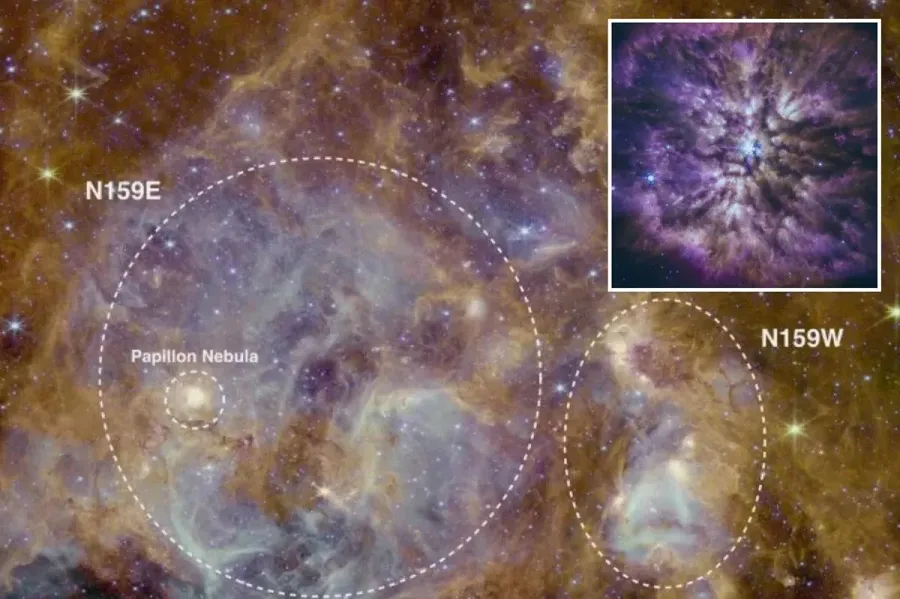
The NASA/ESA James Webb Space Telescope captured a new image of N159, a star‑forming region located about one hundred sixty‑one thousand light‑years away in the Large Magellanic Cloud. The image, selected as Webb’s Picture of the Month for October, shows a turbulent cauldron of gas where massive stars ignite. Scientists note that N159 has a lower metallicity than the Milky Way, offering clues to early‑universe star formation. The colors reveal polycyclic aromatic hydrocarbons, ionized hydrogen, and cool molecular hydrogen filaments that shield newborn stars from harsh radiation. The discovery has excited astronomers and space enthusiasts alike, highlighting the complex chemistry of distant stellar nurseries.
More context
Timeline
- On January 1 2021 James Webb Space Telescope project approved by NASA.
- On May 26 2023 First images released from James Webb Space Telescope.
- On October 29 2026 Webb captures spooky image of N159 star‑forming region.
Why it matters
Immediate US impact: Increases scientific collaboration across universities Possible long-term US impact: Enhances understanding of early star formation Most affected groups: Astronomers, astrophysics students Reader priority: High for science enthusiasts
Coverage notes
Center: Coverage from newstral.com, jwst.nasa.gov, sciencetimes.com frames this as a developing news story: Webb Reveals Spooky Star‑Forming Region. Reporting emphasizes verified facts, named sources, and near-term impact for readers. Left: Left-leaning desks covering the same development typically emphasize public impact, institutional accountability, and who is most affected. Right: Right-leaning desks covering the same development typically emphasize practical outcomes, market or security stakes, and institutional response.
Primary report
New York Post — Webb Reveals Spooky Star‑Forming Region
Sources
JQJO Editorial Desk · Human reviewed · AI assisted. Report a correction.