African Gemsbok Spread in New Mexico Under Climate
PUBLISHED Oct 9, 2026, 2:45 AM ET
Read, Watch or Listen
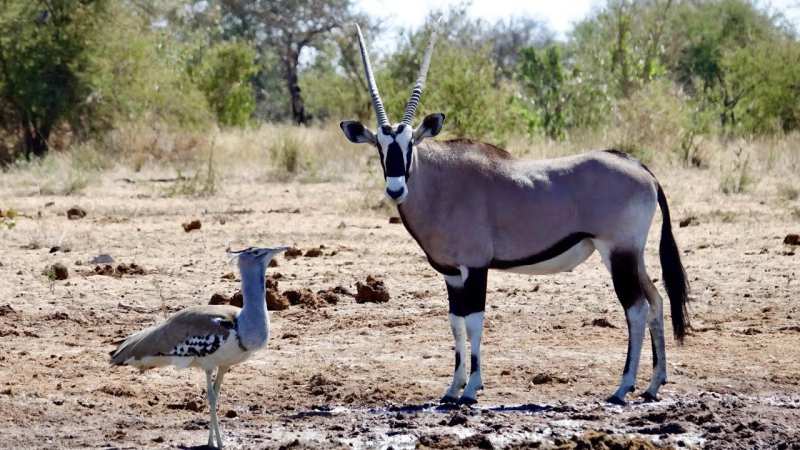
Recent ecological studies published in the Journal of Mammalogy by University of Illinois researchers project significant range expansion for the introduced African gemsbok (Oryx gazella) across the southwestern United States under ongoing climate change. Originally introduced to southern New Mexico's White Sands Missile Range by state biologists between 1969 and 1977, the hardy desert antelope have thrived without native apex predators like lions or hyenas. The new climate projections suggest rising temperatures and changing precipitation patterns could enable these large ungulates to expand further across arid regions, raising concerns among conservationists and ranchers regarding ecosystem competition with native wildlife and potential disease transmission to domestic cattle. While hunters value the prominent trophy species for recreation and local economic contributions, wildlife managers face complex challenges balancing biodiversity preservation and regional environmental impacts as the population continues its northward and westward migration.
By Neha R. | JQJO News
Timeline of Events
- On June 15, 1969, New Mexico Department of Game and Fish began introducing African gemsbok to the Chihuahuan Desert.
- On August 20, 1977, Final batch of imported gemsbok releases concluded at White Sands Missile Range.
- On October 12, 1996, National Park Service constructed a major boundary fence to protect White Sands National Monument flora.
- On November 4, 2018, Wildlife officials noted growing population densities expanding into the San Andres National Wildlife Refuge.
- On September 10, 2024, Researchers initiated spatial modeling studies evaluating climate change effects on desert ungulate habitats.
- On August 14, 2025, Field surveys documented gemsbok presence reaching deep into endorheic basins east of the Caballo Mountains.
- On October 8, 2026, University of Illinois College of ACES published climate range expansion findings for gemsbok.
- On October 9, 2026, Journal of Mammalogy released peer-reviewed study highlighting potential risks to cattle and native species.
- On October 10, 2026, Ranching and conservation stakeholders urged renewed regional management strategies.
- On October 11, 2026, State wildlife agencies prepared updated framework for monitoring southwestern antelope migrations.
News Intelligence
- Immediate US impact: Southwestern ranchers and conservationists review ecological risks from expanding exotic ungulate ranges.
- Possible long-term US impact: Climate-driven shifts alter wildlife management policies and desert biodiversity preservation across western states.
- Most affected groups: New Mexico ranchers, wildlife biologists, conservation organizations, and big-game hunting communities.
- Reader Prioritization: Prioritise peer-reviewed ecological studies, state wildlife department updates, and conservation management reports.
Coverage of Story:
From Center
Associated Press News Hub
Associated Press Reuters National Geographic Smithsonian Magazine Scientific American Nature Science News NPR PBS NewsHour BBC News New York Times Washington Post Los Angeles Times Albuquerque Journal Santa Fe New Mexican The Hill Bloomberg Wall Street Journal NBC News Newsweek Time Axios Politico USA Today CBS News ABC News EurekAlert



Comments