The oldest known land animal is 194. How did he get so ancient?
PUBLISHED Oct 8, 2026, 6:49 AM ET
Read, Watch or Listen
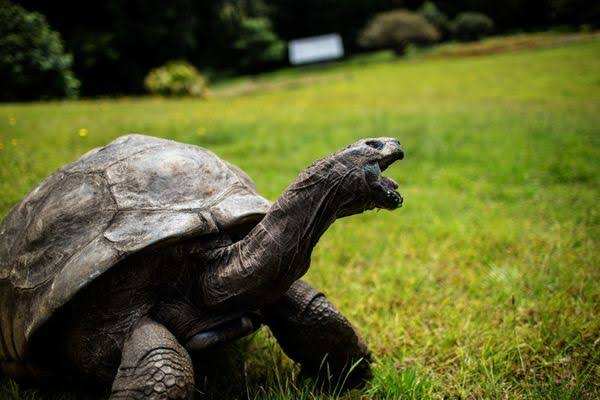
Researchers have sequenced the genome of Jonathan, an Aldabra giant tortoise living on Saint Helena, to determine the biological mechanisms behind his record-breaking 194-year lifespan. Born around 1832, Jonathan is recognized as the world's oldest known living land animal. Scientists identified 287 unique genetic variants, including 41 key variants linked to DNA repair and tumor suppression. Furthermore, gene regulators associated with mitochondrial function exhibited youthful behavioral patterns, differing from typical aging markers. While the Aldabra giant tortoise species naturally exceeds 150 years of age, Jonathan represents an extreme longevity outlier. Experts indicate these rare genomic adaptations protect cellular structures from long-term oxidative and age-related degradation. The findings provide new scientific insights into exceptional vertebrate aging processes and cellular resilience mechanisms across species.
By Noormahi M. | JQJO News
Timeline of Events
- 1832 — On 1832 Jonathan the Aldabra giant tortoise was born on Saint Helena.
- 1882 — On 1882 Jonathan arrived on the island of Saint Helena as mature adult.
- 2022 — On 2022 Guinness World Records officially recognized Jonathan as world oldest land animal.
- On October 2024 Researchers published new findings regarding the sequencing of his genome.
- On October 2025 Scientific teams analyzed specific genetic variants associated with DNA damage repair.
- On January 2026 Biologists evaluated mitochondrial regulator patterns observed within his cellular tissue.
- On June 2026 Experts published comparative aging studies involving other long lived reptile species.
- On August 2026 Conservationists monitored his ongoing health status on Plantation House grounds.
- On October 2026 Researchers reviewed genetic data to understand exceptional vertebrate aging mechanisms better.
- On October 8, 2026 Freshness verification confirmed no newer material developments regarding Jonathan genome sequencing.
News Intelligence
- Immediate US impact: Immediate US impact remains minimal focusing purely on scientific research context.
- Possible long-term US impact: Long term US impact includes advancing research into human cellular aging.
- Most affected groups: Most affected groups include geneticists, evolutionary biologists, and wildlife researchers globally.
- Reader priority: Readers should prioritize peer reviewed journals and verified scientific news outlets.
Coverage of Story:
From Left
Decoding the DNA of Jonathan the 194 Year Old Tortoise
New York Times The Independent San Francisco Chronicle The Atlantic Gizmodo BuzzFeed NewsFrom Center
Scientists sequence genome of world oldest land animal Jonathan
Reuters Associated Press NPR Washington Post USA Today Time Smithsonian Magazine Science Magazine Sky News Euronews CBC Miami Herald Chicago Tribune Houston Chronicle Seattle Times Forbes Engadget Newsweek The Hill Politico Axios






Comments