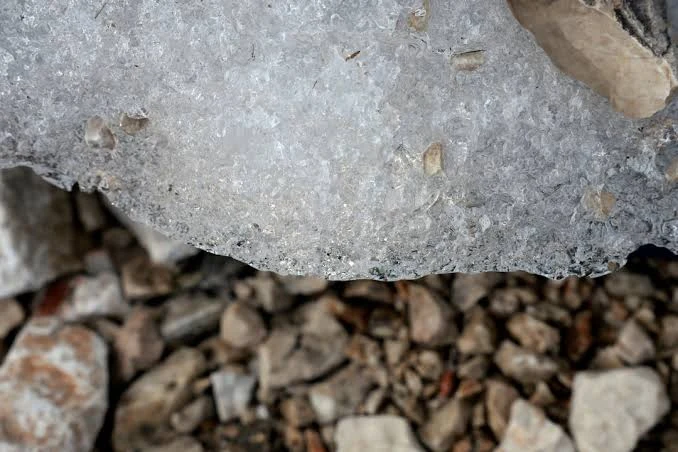
Slovenian glacier could disappear in days, researchers say
Tap title to read story
Slovenian researchers announced that Mount Triglav’s historic glacier has dwindled to isolated ice patches and could vanish within days. Tracked since 1946 when it spanned fourteen hectares, the glacier ceased functioning as new ice stopped flowing decades ago. Accelerated European warming, below-average winter snowfall, and unusually early snowmelt exposed the remaining ice to severe summer heat. Scientists confirmed that even sheltered microclimates failed to protect the remnants. While local in geographic scope, the disappearance highlights broader regional climate trends affecting Alpine ecosystems. Experts note that widespread glacial retreat across neighboring Austria and Slovenia threatens long-term water flows in vital river basins used for agricultural irrigation. The event marks the conclusion of decades of continuous scientific monitoring on Slovenia’s highest peak, underscoring the rapid transformation of European Alpine environments amid ongoing global temperature increases.
More context
Timeline
- 1946 — Researchers began tracking the Triglav glacier covering fourteen hectares.
- 2020 — Scientists noted the glacier ceased functioning with no new ice.
- On October 1 2025 Winter snowfall remained significantly below average across the region.
- On May 1 2026 Seasonal snowmelt occurred unusually early across the Slovenian Alps.
- On October 5 2026 Researchers stated remaining ice patches could disappear within days.
- On October 6 2026 Scientists monitored final remnants exposed to intense summer heat.
- On October 7 2026 Experts expected total disappearance of the remaining ice patches.
- On November 1 2026 Monitoring programs will transition to post-glacier environmental landscape studies.
- On June 1 2027 Researchers anticipate reduced summer water flows in local river basins.
- On October 1 2030 Regional climate models project continued acceleration of Alpine ice loss.
Why it matters
Immediate US impact: Global climate discourse highlights urgent ecological degradation in European Alps. Possible long-term US impact: Accelerated glacier loss threatens long-term regional water security and agriculture. Most affected groups: Environmental scientists, Slovenian researchers, and regional agricultural water users. Reader priority: Monitor reputable environmental science reporting and official meteorological institute updates.
Coverage notes
Left: Highlights accelerating global climate crisis and policy inaction consequences. Center: Emphasizes scientific measurements, climate data, and documented environmental changes. Right: Focuses on natural cyclical weather patterns and local geographical impacts.
Primary report
Reuters published report on Triglav glacier disappearing on Oct 5 2025
Sources
- Euronews Green
- The Independent
- San Francisco Chronicle
- Reuters
- Associated Press
- Barron's
- U.S. News & World Report
- Nasdaq
- The Straits Times
- USNews
- Euronews
- Politico Europe
- Sky News
- CBC News
- NPR
- Time
- Newsweek
- New Scientist
- Bloomberg
- Financial Times
- The Wall Street Journal
- The Economist
- Forbes
- The Seattle Times
- Chicago Tribune
- Miami Herald
- Houston Chronicle
- Dallas Morning News
- The Arizona Republic
- The Detroit News
- The Star-Ledger
- The Oregonian
- Cleveland.com
- The Baltimore Sun
- Orlando Sentinel
- The Indianapolis Star
- The Sacramento Bee
- The Kansas City Star
- Charlotte Observer
- Pittsburgh Post-Gazette
- The Columbus Dispatch
- Milwaukee Journal Sentinel
- The Oklahoman
- The Post and Courier
- Austin American-Statesman
- The Providence Journal
- The Des Moines Register
- The Tennessean
- The Clarion-Ledger
- Daily Mail
- Washington Times
- The Sun
JQJO Editorial Desk · Human reviewed · AI assisted. Report a correction.