Nobel for medicine awarded to 3 scientists for work that helps map the brain
PUBLISHED Oct 5, 2026, 10:46 AM ET
Read, Watch or Listen
The 2026 Nobel Prize in Physiology or Medicine was awarded to Karl Deisseroth, Peter Hegemann, and Georg Nagel for pioneering optogenetics, a technology enabling precise control of brain cell activity using light. Hegemann and Nagel discovered light-gated ion channels in green algae, while Deisseroth implemented these algal genes into mammalian neurons. Researchers now thread optical fibers into brain tissue, using blue light pulses to toggle specific neural circuits on or off within milliseconds. This fundamental breakthrough solved long-standing resolution issues in neuroscience, replacing imprecise electrical stimulation and slow-acting pharmaceuticals. By establishing direct causal links between specific neural pathways and behaviors, optogenetics has transformed research into psychiatric disorders and brain mapping. Clinical applications are now advancing, including optogenetic gene therapies aimed at restoring vision in retinitis pigmentosa patients and refining targeted deep brain stimulation for neurological conditions. Information regarding future commercial scale remains developing.
By Ayesha A. | JQJO News
Timeline of Events
- On 2002-01-01 Nagel and Hegemann discovered channelrhodopsin light sensitivity.
- On 2003-01-01 Channelrhodopsin-2 was characterized as a light-gated ion channel.
- On 2005-08-01 Deisseroth team demonstrated optogenetic control in mammalian brain cells.
- On 2010-01-01 Optogenetics technique gained widespread adoption in international neuroscience laboratories.
- On 2021-05-01 First clinical application showed partial vision recovery in retinitis pigmentosa.
- On 2026-10-05 Nobel Committee awarded Physiology or Medicine Prize to three scientists.
- On 2026-10-05 Nobel Assembly announced prize allocation for pioneering optogenetic brain mapping.
- On 2026-10-05 Stanford and Humboldt universities issued statements celebrating laureate achievements.
- On 2026-10-05 Global scientific community recognized causality milestone in brain circuit research.
- On 2026-12-10 Nobel Laureates will receive formal medals at Stockholm ceremony.
News Intelligence
- Immediate US impact: Boosts funding and prestige for US-based neurotechnology and clinical trial research.
- Possible long-term US impact: Accelerates targeted gene therapies and advanced neuromodulation treatments for mental health.
- Most affected groups: Neuroscientists, psychiatric researchers, biomedical engineers, mental health patients, vision-loss patients, universities.
- Reader priority: Distinguish experimental laboratory neuroscience from immediate bedside clinical treatment availability.
Coverage of Story:
From Left
Nobel Prize in Medicine Awarded to Researchers Who Illuminated Brain Circuits
The New York Times Washington Post NPR ABC News NBC News The Independent Sydney Morning Herald Le MondeFrom Center
Press release: The Nobel Prize in Physiology or Medicine 2026
Nobel Prize Official Reuters Associated Press CBC News Howard Hughes Medical Institute Indian Express Neuroscience News NDTV Business Today Mexico Business News Science Media Centre Spain Science Magazine Bloomberg Financial Times Stanford News Humboldt University Berlin Press New Scientist USA Today The Straits Times South China Morning Post Euronews The Japan Times Anadolu Agency Yonhap News AgencyFrom Right
Scientists Win Medicine Nobel for Work Mapping Brain Circuits Using Light
The Wall Street Journal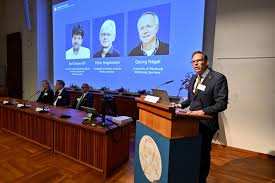





Comments