Russia says there is still time to stop an arms race in space after US orbital weapons admission
Tap title to read story
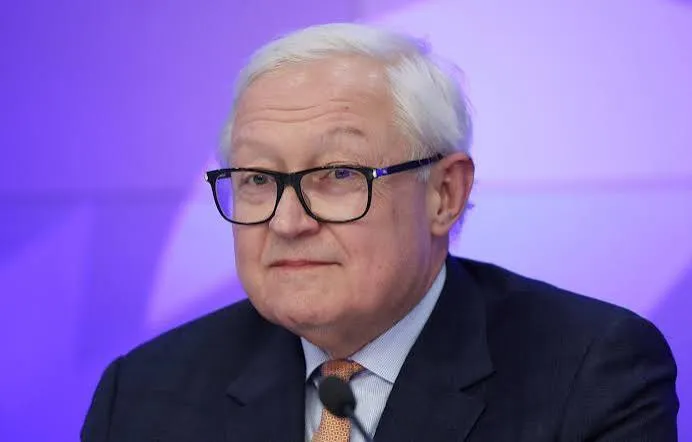
Russia stated on Wednesday that sufficient time remains to prevent a space arms race through a legally binding international treaty outlawing offensive orbital weapons. Deputy Foreign Minister Sergei Ryabkov urged the United States and other global powers to set aside skepticism regarding the proposal following Washington's acknowledgment that the Pentagon operates defensive systems in Earth orbit. U.S. Space Force General Douglas Schiess confirmed this week that military personnel manage on-orbit assets designed to protect joint forces against space-enabled threats. Ryabkov remarked during a Moscow briefing that the revelation brought no surprise to Moscow, which has long advocated for prohibitions against the use or threat of force in outer space. He criticized Western nations for allegedly employing spurious arguments to resist arms control initiatives. Moscow maintains that establishing preventive legal frameworks remains viable to mitigate escalating conflict risks in orbit.
More context
Timeline
- On Nov 26, 2025, Deputy Foreign Minister Sergei Ryabkov held a press conference.
- On Nov 27, 2025, media outlets published statements regarding Russian diplomatic positions.
- On Sep 15, 2026, US Space Force General Douglas Schiess acknowledged orbital weapons.
- On Sep 16, 2026, Deputy Foreign Minister Sergei Ryabkov responded to US admissions.
- On Sep 16, 2026, Moscow called for a legally binding international space treaty.
- On Sep 17, 2026, international analysts reviewed the strategic implications of orbital militarization.
- On Sep 18, 2026, diplomatic discussions regarding space governance faced renewed international scrutiny.
- On Sep 19, 2026, defense officials evaluated potential frameworks for future space arms control.
- On Sep 20, 2026, observers monitored multilateral responses to orbital defense capability disclosures.
- On Sep 21, 2026, policy experts debated feasibility metrics for preventing space conflict escalation.
- Future diplomatic negotiations will address defensive versus offensive space weapons definitions.
- International bodies may convene formal sessions concerning outer space security protocols.
Why it matters
Immediate US impact: Increased strategic scrutiny on United States orbital defense asset operations. Possible long-term US impact: Accelerated global negotiations concerning international outer space weaponization control treaties. Most affected groups: Department of Defense, aerospace manufacturers, and international diplomatic delegations. Reader priority: Monitor official government statements and verified defense policy reports across outlets.
Coverage notes
Left: Emphasizes diplomatic engagement and international treaty frameworks to curb militarization. Center: Reports official statements objectively without favoring particular geopolitical security arguments. Right: Highlights national security imperatives and defensive orbital capabilities against emerging threats.
Primary report
Deputy Foreign Minister Sergei Ryabkov briefing Moscow reporters on space arms on Nov 26, 2025.
Sources
- The Washington Post
- The New York Times
- Time
- Le Monde
- Haaretz
- Reuters
- Al Arabiya
- Global Banking and Finance Review
- Space.com
- Saudi Gazette
- Associated Press
- Bloomberg
- Politico
- Financial Times
- Axios
- Newsweek
- The Hill
- CBC News
- USA Today
- Sky News
- Euronews
- The Straits Times
- South China Morning Post
- Japan Times
- POLITICO Europe
- The Wall Street Journal
- National Review
- The Washington Times
- RT
JQJO Editorial Desk · Human reviewed · AI assisted. Report a correction.