US Tech and Academic Institutions Face Major Strain Over Federal Bans on Chinese Robotics
PUBLISHED Oct 3, 2026, 1:59 AM ET
Read, Watch or Listen
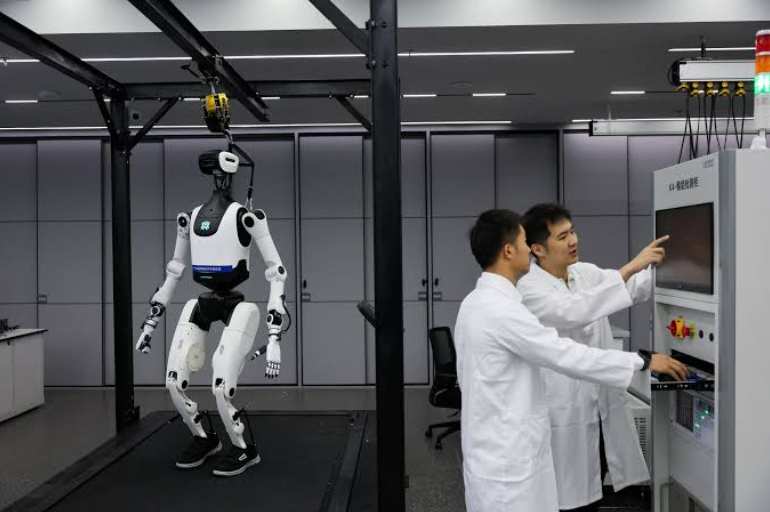
United States technology firms and academic research institutions are experiencing severe operational and financial strain following strict federal prohibitions targeting Chinese-manufactured advanced robotics. The restrictions—enforced through Federal Communications Commission (FCC) bans on humanoid and quadruped robots alongside Department of Defense and federal acquisition rules—aim to mitigate national security and cybersecurity risks. However, university laboratories and commercial developers that relied on highly cost-effective hardware from manufacturers like Unitree and DJI now face major hurdles, supply chain bottlenecks, and complex compliance burdens as they scramble to transition to approved domestic alternatives.
By Neha R. | JQJO News
Timeline of Events
- On November 12, 2024, the federal government restricted the procurement and operation of unmanned aircraft systems from designated foreign entities under FAR rules.
- On December 22, 2025, federal rules took full effect prohibiting federally funded university contractors from operating restricted foreign-made drones.
- On April 16, 2026, Chinese robotics manufacturers scaled up global export pipelines for affordable humanoid platforms.
- On July 28, 2026, the Federal Communications Commission announced a formal ban on imports of new Chinese-made humanoid and quadruped robots.
- On July 29, 2026, the Trump administration enacted broader restrictions targeting advanced foreign robotics and power inverters to protect domestic AI supply chains.
- On August 5, 2026, university research offices across the United States issued emergency guidance regarding compliance with federal hardware bans.
- On August 18, 2026, robotics lab directors reported significant budget strains and project delays due to sudden hardware sourcing shortages.
- On September 4, 2026, domestic robotics developers like Tesla and Figure AI faced mounting pressure to ramp up production to meet academic demand.
- On September 15, 2026, higher education coalitions petitioned federal agencies for clarification on existing equipment grandfathering clauses.
- On October 1, 2026, institutions continued struggling to reconcile strict federal compliance standards with high costs of alternative robotic hardware.
News Intelligence
- Immediate US impact: Academic research labs and tech firms scramble to replace banned hardware and comply with strict federal security directives.
- Possible long-term US impact: Accelerated push for domestic robotics manufacturing and alternative AI supply chains, alongside higher capital costs for public institutions.
- Most affected groups: University researchers, robotics engineers, federal grant administrators, and domestic hardware developers.
- Reader Prioritization: Prioritise official FCC advisories, compliance guidelines from university research offices, and updates from domestic robotics manufacturers.
Coverage of Story:
From Center
Associated Press News Hub
Associated Press Reuters PBS NewsHour Al Jazeera South China Morning Post Bloomberg Wall Street Journal New York Times Washington Post Politico Axios The Hill NBC News NPR BBC News Newsweek Time Wired The Verge TechCrunch Ars Technica MIT Technology Review Chronicle of Higher Education Inside Higher Ed Financial Times Forbes Nature





Comments