National Weather Service Issues Early Freeze Warnings and Frost Advisories Across Northern States
PUBLISHED Oct 3, 2026, 2:04 AM ET
Read, Watch or Listen
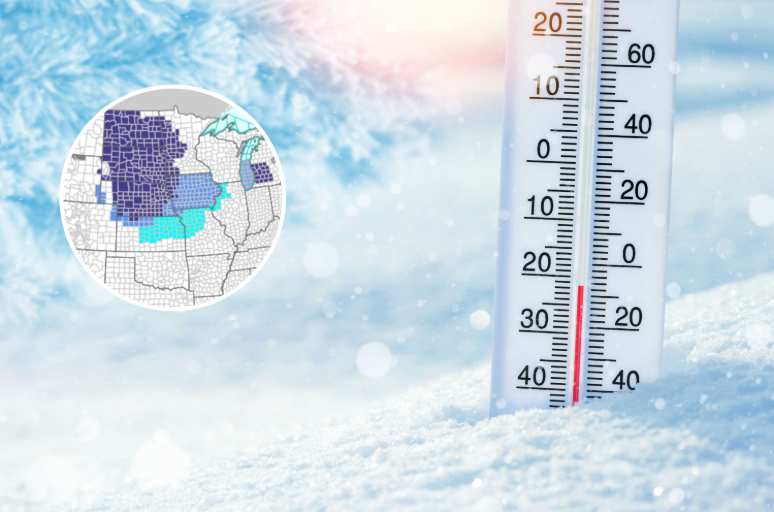
The National Weather Service has issued early-season freeze warnings and frost advisories across several northern and central states as an unseasonable cold front sweeps southward from Canada. Overnight temperatures are forecasted to plummet below freezing in parts of the Upper Midwest, Great Lakes, and northern Plains, threatening sensitive agricultural crops, autumn foliage, and unharvested late-season produce. Meteorologists indicate that while this sharp temperature drop marks an abrupt transition into meteorological autumn, the chilly pattern is expected to moderate by the middle of the month.
By Neha R. | JQJO News
Timeline of Events
- On September 25, 2026, Climate Prediction Center models detected an impending polar trough forming over central Canada.
- On September 27, 2026, NOAA released preliminary maps highlighting northern states at risk of early frost.
- On September 29, 2026, surface high-pressure systems began channeling Arctic air southward into the northern Plains.
- On October 1, 2026, commercial transport updates warned logistics operators of sudden temperature shifts across the region.
- On October 2, 2026, the National Weather Service officially upgraded regional outlooks to active freeze warnings and frost advisories.
- On October 3, 2026, morning temperatures dipped near or below 32 degrees Fahrenheit across sections of North Dakota, Minnesota, and Wisconsin.
- On October 3, 2026, agricultural extension offices advised local farmers to implement immediate frost protection measures.
- On October 4, 2026, forecasters tracked the cold front extending eastward into the Great Lakes and Upper Midwest.
- On October 5, 2026, authorities anticipated peak overnight cold thresholds before moderating daytime highs.
- On October 6, 2026, long-range climate models projected a gradual return to seasonal or slightly above-normal temperatures.
News Intelligence
- Immediate US impact: Agricultural producers and gardeners across northern states rush to protect unharvested crops from unexpected frost damage.
- Possible long-term US impact: Accelerates the transition into the winter weather season across the northern tier and influences regional harvest timelines.
- Most affected groups: Farmers, regional commuters, agricultural stakeholders, and residents in the Upper Midwest and Great Lakes.
- Reader Prioritization: Consult official National Weather Service updates, local advisories, and agricultural extension alerts.
Coverage of Story:
From Center
Associated Press News Hub
Associated Press Reuters National Weather Service Climate Prediction Center AccuWeather The Weather Channel NBC News ABC News USA Today NPR The Hill Bloomberg Wall Street Journal Newsweek Time Axios Politico BBC News CBS News Washington Post New York Times Los Angeles Times Forbes Scientific American Weather Underground National Geographic PBS NewsHour


Comments