Massive 'Kelvin Wave' Pulse Approaches California Coastline, Threatening Flooding and Tide Surges
PUBLISHED Oct 3, 2026, 3:56 AM ET
Read, Watch or Listen
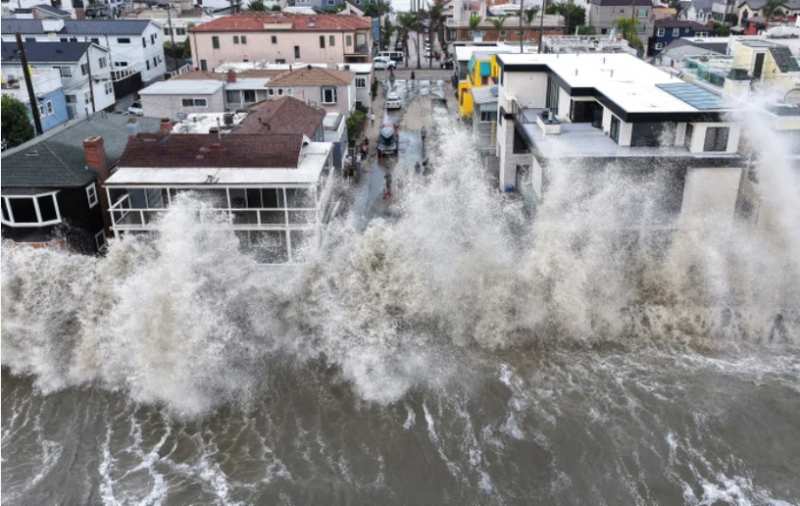
An enormous planetary-scale Kelvin wave driven by El Niño conditions is advancing toward the California coastline, threatening to raise sea levels by half a foot to a full foot. Scientists and researchers have warned that this warm-water surge will significantly exacerbate coastal flooding, severe erosion, and saltwater intrusion risks across Southern California and the Bay Area. Unlike surface tsunamis, this deep-ocean wave acts as a massive subterranean slosh, raising baseline tides and increasing vulnerability when combined with high tides and storm surges. State and local authorities are ramping up emergency preparedness as elevated ocean levels are expected to linger well into the winter and spring of two thousand twenty-seven.
By Neha R. | JQJO News
Timeline of Events
- On May 15, 2026, Initial preliminary Kelvin wave propagation was observed moving northward up the Pacific coastline.
- On August 10, 2026, Climate scientists warned that California could experience record-high sea levels in the fall and winter.
- On September 29, 2026, Meteorological agencies detailed the planetary-scale Kelvin wave traversing the equatorial Pacific Ocean.
- On September 30, 2026, News outlets reported on the massive warm-water pulse nearing the Southern California coastline.
- On September 30, 2026, Researchers at North Carolina State University identified the surge as a major El Niño indicator.
- On October 1, 2026, Forecasts projected the Kelvin wave to reach the San Francisco Bay Area by early to mid-October.
- On October 1, 2026, Scientists noted that sea levels could remain elevated by up to a foot for several months.
- On October 2, 2026, Emergency management officials coordinated resources to protect vulnerable coastal communities and infrastructure.
- On October 3, 2026, State agencies reviewed contingency plans for heightened flood risks during upcoming seasonal high tides.
- On October 3, 2026, Environmental experts continued monitoring subsequent wave formations expected to follow later in the season.
News Intelligence
- Immediate US impact: Coastal communities across California prepare for elevated sea levels and heightened flood risks during high tides.
- Possible long-term US impact: Accelerated shoreline erosion and increased structural vulnerability to long-term climate change and land subsidence.
- Most affected groups: California coastal residents, homeowners, municipal emergency managers, and marine researchers.
- Reader Prioritization: Prioritize official updates from NOAA, local emergency services, and verified meteorological reports.
Coverage of Story:
From Center
Associated Press News Hub
Associated Press Reuters The New York Times Washington Post Los Angeles Times BBC News NPR Bloomberg Wall Street Journal USA Today San Francisco Chronicle The Mercury News ABC News NBC News CBS News Politico The Hill Axios Newsweek Time The Weather Channel The Weather Network Futurism KQED Society of Environmental Journalists National Geographic



Comments