How the Smithsonian is using AI to connect artifacts from the American Revolution
PUBLISHED Oct 3, 2026, 6:55 AM ET
Read, Watch or Listen
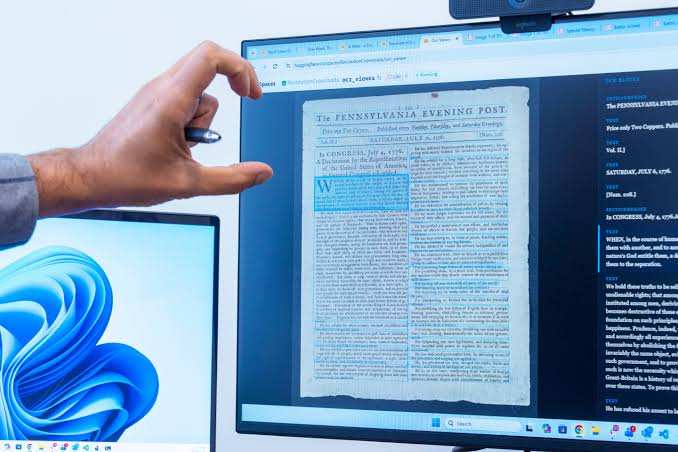
The Smithsonian Institution is utilizing artificial intelligence to connect and analyze extensive collections related to the American Revolution. Officials note the technology links disparate historical records and uncovers overlooked narratives. While acknowledging caution regarding frontier models, the institution incorporates human historians to verify findings and preserve nuances. Leadership emphasizes that digital transformation expands public access to historical archives.
By Noormahi M. | JQJO News
Timeline of Events
- On January 15 2026 Smithsonian leaders announced expanded digital humanities initiatives.
- On February 10 2026 researchers began testing machine learning on archival documents.
- On March 5 2026 technologists integrated text analysis tools for revolutionary records.
- On March 20 2026 curators reviewed initial artifact connection results with historians.
- On April 2 2026 the institution outlined protocols for responsible technology use.
- On April 18 2026 specialists presented preliminary findings on cross-referencing military service.
- On May 4 2026 developers refined algorithms to identify historical nicknames accurately.
- On May 22 2026 public engagement teams planned digital archive access features.
- On June 8 2026 directors evaluated risk management strategies for emerging models.
- On October 3 2026 the Smithsonian confirmed broader rollout plans for researchers.
News Intelligence
- Immediate US impact: Improves digital access to foundational American historical documents nationwide.
- Possible long-term US impact: Enhances long term preservation and cross-referencing of national museum archives.
- Most affected groups: Most affected groups include historians, archivists, researchers, and museum visitors.
- Reader priority: Prioritize official Smithsonian press releases and verified cultural reporting sources.
Coverage of Story:
From Left
No left-leaning sources found for this story.
From Center
Smithsonian Uses AI to Connect American Revolution Artifacts
Smithsonian Magazine Associated Press Reuters NPR The Washington Post Wall Street Journal USA Today NBC News Chicago Tribune Politico Time Newsweek Bloomberg Forbes Fast Company Smithsonian Air & SpaceFrom Right
No right-leaning sources found for this story.







Comments