What a competitive robotic surgery market means for providers
Tap title to read story
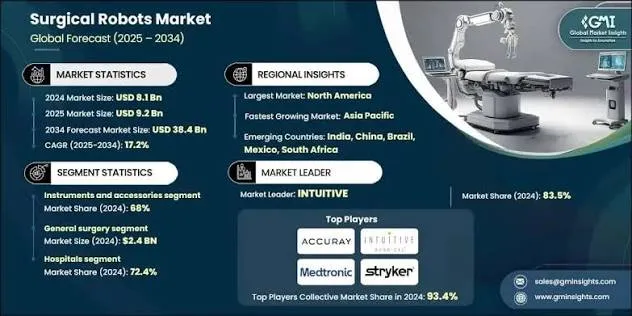
Increased market competition within surgical robotics is dismantling historical pricing monopolies, providing healthcare providers with enhanced purchasing power, flexible pricing structures, and alternative business models such as robot-as-a-service. Newer entrants are introducing modular designs and specialized platforms tailored for orthopedics, spine, and general surgery, allowing smaller hospitals and ambulatory centers to adopt advanced technology previously restricted to major academic medical centers. Beyond equipment costs, health systems are leveraging modern robotic systems to improve surgeon recruitment, retention, and patient attraction through enhanced clinical capabilities like AI navigation and haptic feedback. However, clinical leaders must evaluate how multi-vendor platforms integrate with existing workflows, sterile processing protocols, and long-term institutional goals. While flexible pricing and compact system footprints reduce barriers to entry, managing diverse technology portfolios requires careful operational planning to ensure safety standards and cost-efficiency remain balanced across all participating surgical service lines.
More context
Timeline
- On January 15 2024 Market reports highlighted rising demands for alternative surgical robots.
- On March 10 2024 Emerging companies introduced modular cart designs for smaller surgical centers.
- On June 22 2024 Industry analysts evaluated robot-as-a-service financing adoption rates among hospitals.
- On September 14 2024 Healthcare providers expanded specialty robotic platforms into ambulatory surgical centers.
- On November 5 2024 Medical institutions integrated AI-assisted navigation features into daily workflows.
- On February 18 2025 Regulatory reviews monitored expanding surgical robotics competition across global markets.
- On May 30 2025 Hospital systems reported improved surgeon recruitment utilizing advanced robotic options.
- On August 12 2025 Equipment manufacturers streamlined digital training programs for hospital operating staff.
- On October 20 2025 Financial evaluations assessed long-term service contract pricing and consumable instruments.
- On January 5 2026 Providers balanced multi-vendor integration challenges with enhanced patient marketing.
Why it matters
Immediate US impact: Hospitals gain lower equipment costs and expanded surgical service choices. Possible long-term US impact: Providers will experience permanent shifts toward multi-vendor robotic ecosystems. Most affected groups: Hospital administrators, surgeons, procurement officers, and surgical equipment manufacturers. Reader priority: Readers should prioritize primary industry market reports and health technology updates.
Coverage notes
Left: Emphasizes equitable technology access for smaller community healthcare facilities. Center: Focuses objectively on market competition, cost structures, and provider options. Right: Highlights free-market innovation, corporate competition, and strategic institutional growth.
Primary report
Industry analysis report detailed competitive robotic surgery market provider impacts.
Sources
- NPR Health News
- New York Times Business
- Washington Post Business
- San Francisco Chronicle Business
- Modern Healthcare
- Becker's Hospital Review
- MedTech Dive
- Fierce Healthcare
- Medical Device and Diagnostic Industry
- HealthLeaders Media
- Bloomberg Law Healthcare
- Reuters Health
- Wall Street Journal Pro Health
- Axios Health
- Fierce MedTech
- Medical Product Outsourcing
- Healthcare Finance News
- U.S. News & World Report Health
- Modern Healthcare Operations
- BioWorld
- Crain's Health Pulse
- MassDevice
- Joint Commission Perspectives
- Bloomberg Technology
- Reuters Business
- Financial Times Healthcare
- Chicago Tribune Business
- Dallas Morning News Business
- Miami Herald Business
- Seattle Times Business
- Detroit News Business
- Houston Chronicle Business
- Minneapolis Star Tribune Business
- Phoenix Business Journal
- Silicon Valley Business Journal
- Becker's ASC Review
- Surgical Products Magazine
- Hospital News International
- Medical Device Daily
- Forbes Healthcare
- Wall Street Journal Markets
JQJO Editorial Desk · Human reviewed · AI assisted. Report a correction.