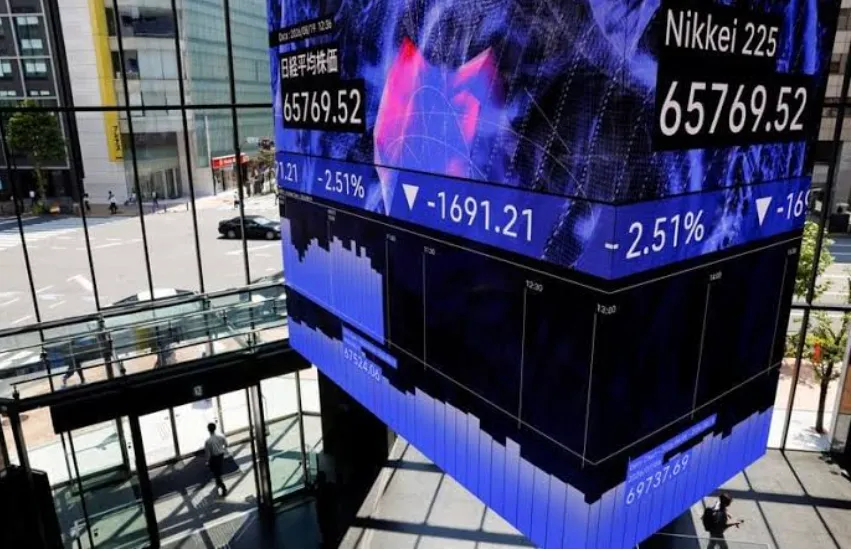
Asian shares fall after wild swings in bonds, FX; US jobs data looms
Tap title to read story
Asian shares declined as investors navigated extreme volatility in global bond and currency markets, driven by surging U.S. Treasury yields and European debt pressures, while awaiting the crucial U.S. nonfarm payrolls report. Regional indices slipped as safe-haven flows strengthened the U.S. dollar and Swiss franc. Meanwhile, elevated oil prices due to Middle East geopolitical developments and supply constraints added further inflationary anxiety to global equity markets.
More context
Timeline
- On September 28, 2026, Global bond markets experienced heightened volatility following unexpected shifts in European debt yields.
- On September 29, 2026, French and German bond yield spreads widened, triggering a rout in European sovereign debt.
- On September 30, 2026, Dovish commentary from Federal Reserve officials sparked a temporary rally in short-term U.S. Treasuries.
- On October 1, 2026, Capital moved aggressively into safe-haven assets, propelling the U.S. dollar and Swiss franc higher.
- On October 1, 2026, Asian equity markets began showing signs of caution ahead of upcoming macroeconomic indicators.
- On October 2, 2026, MSCI's broadest index of Asia-Pacific shares outside Japan dropped 0.5%, pointing toward a weekly loss.
- On October 2, 2026, Japan's capital inflation data accelerated to an annual rate of 2.7%, fueling expectations for further interest rate hikes.
- On October 2, 2026, WTI crude futures remained steady near $92.84 a barrel amid tightening regional supplies and Gulf tensions.
- On October 2, 2026, Global investors positioned themselves defensively ahead of the critical U.S. September jobs report.
- On October 2, 2026, Wall Street futures stabilized following late-session rebounds driven by retreating short-end Treasury yields.
Why it matters
Immediate US impact: Market participants experience heightened anxiety and portfolio adjustments ahead of the key U.S. employment report. Possible long-term US impact: Federal Reserve rate trajectory and Treasury yield fluctuations continue to steer international equity flows. Most affected groups: Global equity investors, currency traders, bond portfolio managers, and multinational corporations. Reader Prioritization: Focus on official U.S. labor department announcements, Fed policy statements, and benchmark yield reports.
Coverage notes
Left: Emphasizes the broader socio-economic and global labor market implications alongside systemic financial instability. Center: Focuses on quantitative market movements, currency fluctuations, bond yields, and official economic reports. Right: Highlights fiscal policy pressures, debt risks, and the impact of interest rate expectations on enterprise growth.
Primary report
Asian shares fall after wild swings in bonds and foreign exchange as U.S. jobs data looms.
Sources
- CNN Business
- The Guardian
- Associated Press
- Reuters
- Bloomberg
- Wall Street Journal
- Financial Times
- CNBC
- MarketWatch
- Yahoo Finance
- BBC News
- New York Times
- Washington Post
- Forbes
- Fortune
- Business Insider
- Barron's
- The Economist
- Nikkei Asia
- South China Morning Post
- Channel News Asia
- ABC News
- NBC News
- CBS News
- Politico
- The Hill
- Al Jazeera
- Deutsche Welle
- Yahoo Sports
- Fox Business
- Reuters
JQJO Editorial Desk · Human reviewed · AI assisted. Report a correction.