US Adds Carrier and 10,000 Troops to Mideast, Official Says
Tap title to read story
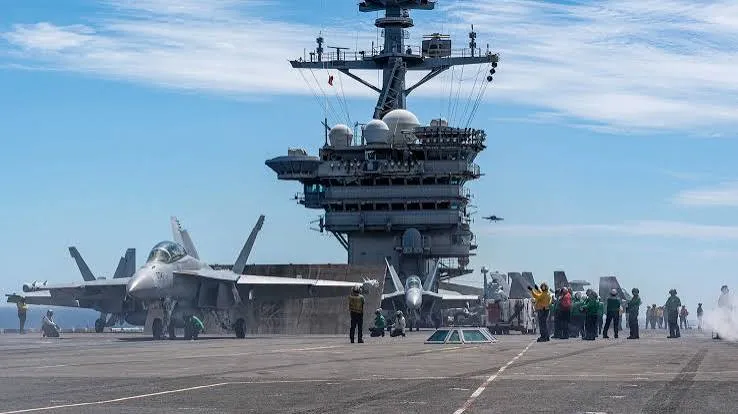
The Pentagon is significantly bolstering its military posture in the Middle East by deploying an additional aircraft carrier strike group and roughly 9,000 to 10,000 sailors, Marines, and service members to the region. The USS Theodore Roosevelt aircraft carrier departed from its home port in San Diego, followed by the USS Makin Island Amphibious Ready Group carrying Marines from the 13th Marine Expeditionary Unit. This movement brings the United States closer to maintaining three full carrier strike groups in the theater, matching force levels last seen in April. The total military presence will supplement over 50,000 troops already stationed in the area. Forces and warships are expected to arrive and position themselves fully by the end of November. Administration officials note the buildup provides commanders with expanded tactical options and offers greater flexibility for potential operations involving Iran following the U.S. midterm elections.
More context
Timeline
- On April 2026 U.S. military forces maintained three carrier strike groups active.
- On May 2026 regional tensions escalated across the Middle East theater.
- On June 2026 military planners drafted expanded regional reinforcement operational plans.
- On July 2026 defense officials reviewed strategic assets and deployment timelines.
- On August 2026 Pentagon leaders evaluated post-election operational readiness requirements.
- On September 2026 formal deployment orders were prepared for naval commands.
- On October 2026 the USS Theodore Roosevelt departed San Diego port.
- On November 2026 deployed warships and troops will reach theater positions.
- On December 2026 post-midterm political decisions may dictate regional operational escalations.
- On January 2027 enhanced force posture will sustain ongoing strategic deterrence.
Why it matters
Immediate US impact: Heightened military readiness and expanded regional command tactical flexibility. Possible long-term US impact: Sustained naval commitments affecting global fleet rotation and readiness. Most affected groups: U.S. Navy sailors marines and regional defense command personnel. Reader priority: Track official Pentagon announcements and verified defense reporting updates closely.
Coverage notes
Left: Focuses on diplomatic risks and potential regional escalation concerns. Center: Reports deployment facts timeline and strategic military assets neutrally. Right: Emphasizes deterrence strength and presidential command tactical operational flexibility.
Primary report
Pentagon official announced carrier and troop deployment to Middle East.
Sources
JQJO Editorial Desk · Human reviewed · AI assisted. Report a correction.