US FAA says Boeing 737 MAX software glitch poses no safety issue
PUBLISHED Oct 2, 2026, 6:38 PM ET
Read, Watch or Listen
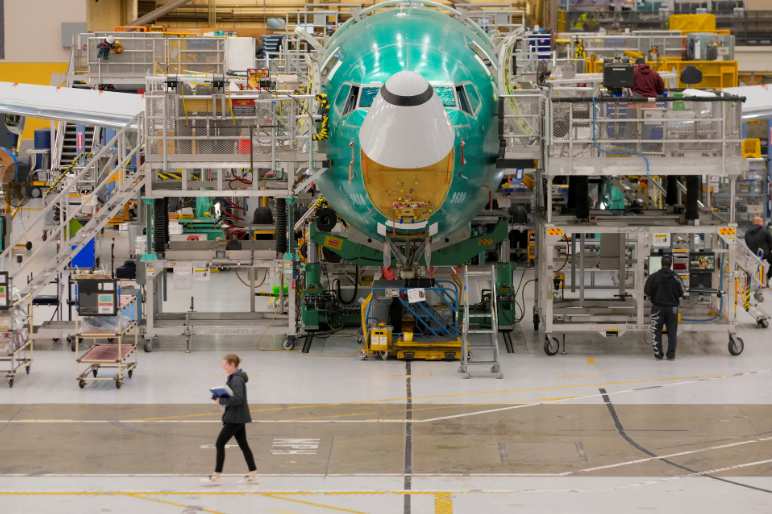
The Federal Aviation Administration determined that a newly identified software glitch affecting certain Boeing 737 MAX aircraft does not present a flight-safety concern, following an internal review by its Corrective Action Review Board. The anomaly, which relates to automated vertical navigation and landing guidance functions under specific missed approach scenarios, raised brief industry scrutiny. However, federal regulators concluded that the issue poses no immediate risk because pilots retain full control of the aircraft and flight deck indications remain clear and unambiguous. The decision removes a potential regulatory hurdle for the certification of the larger Boeing 737 MAX 10 variant, prompting a positive market reaction with Boeing shares trading higher following the announcement. Meanwhile, engineering teams are developing a permanent software update to address the issue and formalize updated operational procedures with airline operators.
By Yusra M. | JQJO News
Timeline of Events
- On September 26, 2026, Boeing flagged a software glitch affecting automated vertical navigation on certain 737 MAX aircraft.
- On September 27, 2026, aviation industry officials discussed potential operational implications during specific landing maneuvers.
- On October 1, 2026, the US Federal Aviation Administration announced plans to convene its Corrective Action Review Board.
- On October 2, 2026, the FAA review board evaluated technical data regarding the software anomaly.
- On October 2, 2026, regulators formally ruled that the glitch poses no flight-safety risk.
- On October 2, 2026, financial markets responded positively as Boeing shares gained following the regulatory clearance.
- On October 3, 2026, industry analysts noted the decision clears the path for upcoming 737 MAX 10 certification.
- On October 3, 2026, Boeing confirmed ongoing collaboration with airline operators to implement standard software patches.
- On October 3, 2026, aviation authorities emphasized that pilots maintain full control during all flight phases.
- On October 3, 2026, transport officials confirmed routine monitoring of flight operations across domestic fleets.
News Intelligence
- Immediate US impact: Aviation markets and airline investors respond positively as regulatory clearance removes uncertainty.
- Possible long-term US impact: Facilitates smooth certification timelines for new aircraft variants while reinforcing safety protocol transparency.
- Most affected groups: Boeing engineering personnel, commercial airline operators, and aviation regulatory officials.
- Reader Prioritization: Prioritize official FAA statements, Boeing press releases, and verified financial market analyses.
Coverage of Story:
From Center
Associated Press News Hub
Associated Press Reuters CNBC Wall Street Journal Bloomberg NBC News ABC News CBS News The Washington Post New York Times USA Today Los Angeles Times Chicago Tribune The Hill Politico Axios Newsweek Time Forbes Fortune MarketWatch Investing.com Yahoo Finance Barron's Financial Times BBC News NPR






Comments