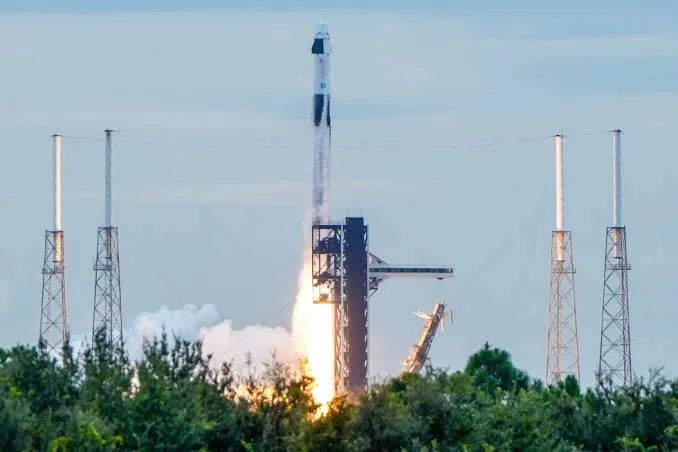
SpaceX launches 4 astronauts on a fast track to the International Space Station
Tap title to read story
SpaceX successfully launched four astronauts aboard a Dragon capsule toward the International Space Station following a three-week delay due to a fuel system leak. Liftoff occurred from Cape Canaveral Space Force Station after morning clouds cleared. NASA astronaut Jessica Watkins made history as the first Black woman to command an orbital crewed flight, joined by NASA veteran Luke Delaney, Canadian Space Agency pilot Joshua Kutryk, and Russian cosmonaut Sergey Teteryatnikov. The mission, designated Crew-13, features an accelerated eight-hour transit to the orbiting laboratory. The crew will spend six months conducting microgravity research and station maintenance, replacing four astronauts who arrived earlier in February. Weather conditions threatened the morning countdown before favorable skies permitted safe clearance. The flight marks the thirteenth operational commercial crew mission conducted by SpaceX for NASA under their ongoing partnership, continuing routine international collaboration in low Earth orbit.
More context
Timeline
- On April 17, 1970 (12:53 AM EST) Apollo 13 astronauts safely returned following harrowing lunar mission.
- On February 15, 2026 (10:00 AM EST) Four previous astronauts arrived at the International Space Station.
- On October 1, 2026 (08:00 AM EST) Morning clouds threatened scheduled Cape Canaveral Space Force Station countdown.
- On October 1, 2026 (11:30 AM EST) SpaceX launched four astronauts toward the International Space Station.
- On October 1, 2026 (07:30 PM EST) Dragon capsule completed fast-track transit arriving at orbital laboratory.
- On October 2, 2026 (06:00 AM EST) Crew members began initial station orientation and handover tasks.
- On April 2, 2027 (12:00 PM EST) Scheduled return date for Crew-13 following six-month stay.
- On May 1, 2027 (09:00 AM EST) Post-flight technical review of Dragon capsule fuel system scheduled.
- On June 1, 2027 (10:00 AM EST) Public release of microgravity research data collected by crew.
- On July 1, 2027 (08:00 AM EST) Evaluation of future commercial crew rotation timelines begins.
Why it matters
Immediate US impact: Advances commercial space transportation reliability and international scientific partnerships. Possible long-term US impact: Strengthens sustained commercial crew capabilities for future lunar exploration. Most affected groups: Aerospace engineers, NASA administrators, international space agencies, and space researchers. Reader priority: Monitor official NASA updates and verified space agency announcements.
Coverage notes
Left: Emphasizes historic milestone of first Black female mission commander. Center: Focuses strictly on technical launch details and mission milestones. Right: Highlights commercial space achievements and international aerospace engineering collaboration.
Primary report
SpaceX launched four astronauts to the space station on October 1.
Sources
- The New York Times
- NBC News
- National Public Radio
- Al Jazeera
- The Independent
- Haaretz
- The New Arab
- Gizmodo
- Reuters
- Associated Press
- Space.com
- Spaceflight Now
- NASA Official Blog
- India Today
- Bastille Post
- NASA Space Station Blog
- SpaceX Official
- NASA News Release
- NASA Live Broadcast
- The Washington Post
- Politico
- USA Today
- Time
- Bloomberg
- CBC News
- Evening Standard
- Sky News
- Euronews
- The Straits Times
- NDTV
- The Japan Times
- Asahi Shimbun
- Yomiuri Shimbun
- Anadolu Agency
- Quartz
- Engadget
- VentureBeat
- New Scientist
- The Wall Street Journal
- Forbes
- RT
- The Times
- The Australian
JQJO Editorial Desk · Human reviewed · AI assisted. Report a correction.