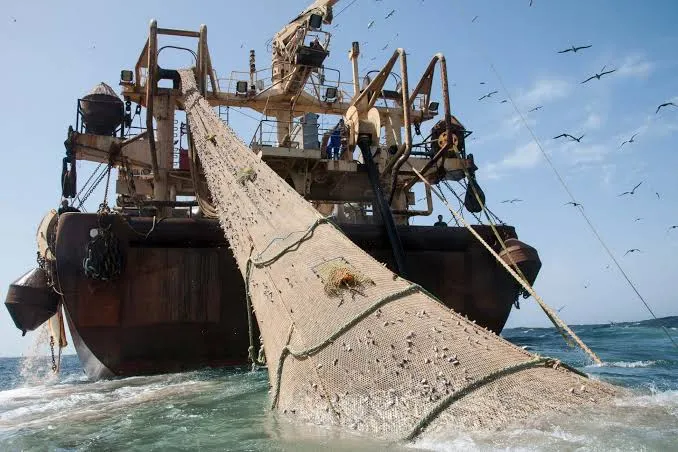
‘Mega-Industrial’ Trawlers Threaten Europe’s Ocean Health
Tap title to read story
A study released by marine conservation group BLOOM reveals that 638 mega-industrial trawlers, representing just one percent of Europe's total fishing fleet, harvest more than half of all fish caught by European vessels. Measuring 108 feet or longer, these super-trawlers cause extensive marine damage through non-selective bycatch, benthic habitat destruction, and significant carbon emissions from seabed disruption. Furthermore, distant-water operations average 2,600 miles from home ports, putting economic pressure on small-scale fishers in West Africa and Europe who constitute 99 percent of the fishing workforce. The European Union allocates over $100 million annually to secure access rights in foreign coastal waters for these vessels. Conservation advocates and local fishing representatives are urging the European Parliament to allocate $3 billion to decommission these industrial vessels by 2035, advocate for vessel length caps at 108 feet, and reallocate harvest quotas to lower-impact coastal fishers to facilitate ocean recovery.
More context
Timeline
- On 2013 CFP reform mandated sustainable maximum sustainable yield target limits.
- On 2019 EU prohibited bottom trawling below 800 meters depth.
- On 2021 global studies highlighted carbon released by deep bottom trawling.
- On 2023 EU outlined action plan to protect marine ecosystem health.
- On 2024 West African coastal groups protested foreign industrial trawler activity.
- On 2025 NGOs published analysis on super-trawler capacity and environmental impact.
- On October 1 2026 conservation coalitions formally petitioned European Parliament for decommissioning.
- On October 1 2026 small-scale fishing unions endorsed proposed 108-foot length restrictions.
- On October 1 2026 European fisheries committee scheduled initial preliminary policy discussions.
- European Parliament expected to debate fishing fleet modernization and quota reallocation.
Why it matters
Immediate US impact: Imports of European seafood face heightened scrutiny regarding sustainable harvesting. Possible long-term US impact: US fishery regulators may adopt similar vessel length restriction standards. Most affected groups: Commercial fishing companies, small-scale fishers, marine ecosystems, and seafood consumers. Reader priority: Monitor official European Parliament legislative responses and fishing quota proposals.
Coverage notes
Left: Highlights corporate exploitation, worker displacement, and severe marine biodiversity loss. Center: Focuses on regulatory proposals, statistical vessel data, and policy debates. Right: Emphasizes potential seafood market supply disruptions and high transition costs.
Primary report
NGO campaign released analyzing European mega-trawler environmental impact on 2026-10-01.
Sources
- Inside Climate News
- BLOOM Association
- Le Monde
- Washington Post
- Greenpeace International
- Greenpeace Canada
- Deep Sea Conservation Coalition
- Ocean Geographic
- Reuters
- Euronews
- Politico Europe
- Financial Times
- Associated Press
- Bloomberg
- NBC News
- Seattle Times
- Miami Herald
- Chicago Tribune
- Houston Chronicle
- World Wildlife Fund
- Marine Conservation Society
- Marine Policy Journal
- SeafoodSource
- Sea Technology Magazine
- International Maritime Digest
- Marine Ecology Progress Series
- Wall Street Journal
- National Fisherman
JQJO Editorial Desk · Human reviewed · AI assisted. Report a correction.