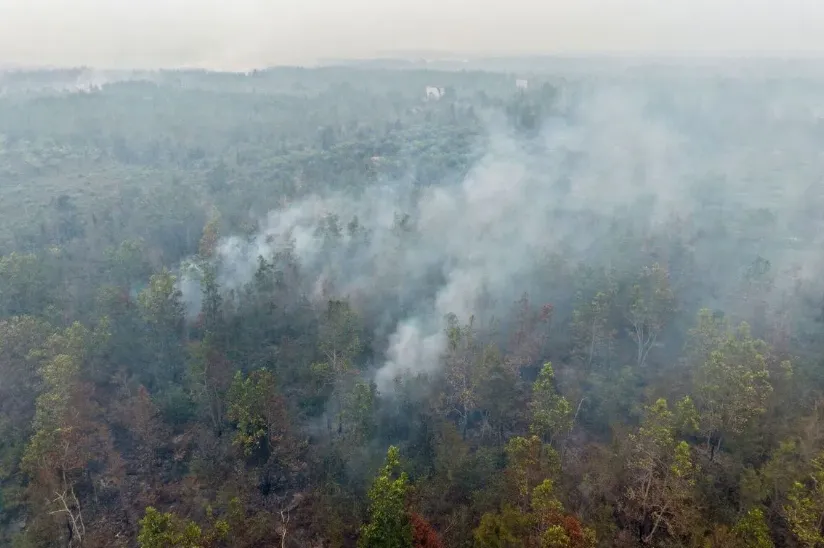
One third of USA population exposed to harmful air pollution monitor
Tap title to read story
The European Union’s Copernicus Climate Atmosphere Monitoring Service published its 2026 Atmosphere Watch report on September 30, 2026, revealing that over one-third of the global population experienced hazardous ground-level ozone pollution during the first eight months of the year. In North America, climate-driven heatwaves and widespread wildfire smoke pushed air quality to poor or extremely poor levels for more than two-thirds of the population. Ground-level ozone forms when sunlight and extreme heat react with emissions from industrial plants, vehicles, and fires, posing significant threats to human respiratory health. CAMS Director Laurence Rouil emphasized that transboundary pollution moves across continents, making localized regulation insufficient. The World Health Organization recommends a maximum eight-hour ozone limit of 100 micrograms per cubic meter, a threshold breached across major populated regions in 2026. The findings highlight escalating public health risks driven by climate-linked environmental hazards across the United States and globally.
More context
Timeline
- On September 30 2026 CAMS released global Atmosphere Watch report detailing ozone pollution.
- On June 01 2026 Warming El Nino pattern began intensifying regional wildfire conditions globally.
- On August 31 2026 Eight month evaluation period for CAMS global pollution analysis concluded.
- On April 24 2024 American Lung Association reported elevated air pollution exposure across USA.
- On March 18 2025 IHME published research on global household air pollution exposures.
- On September 30 2026 World Health Organization guidelines cited regarding ozone concentration limits.
- On September 30 2026 Public health advisories highlighted ground level ozone respiratory impacts.
- On September 30 2026 Environmental agencies monitored transboundary smoke from North American fires.
- On October 01 2026 Expected increase in international air quality monitoring regulatory discussions.
- On December 31 2026 Expected culmination of 2026 global atmospheric pollution tracking data.
Why it matters
Immediate US impact: North American heatwaves and wildfire smoke severely compromised air quality. Possible long-term US impact: Rising global temperatures will consistently worsen ground level ozone risks. Most affected groups: Affected groups include residents across North America with respiratory vulnerabilities. Reader priority: Prioritize verified environmental agency data over unverified social posts.
Coverage notes
Left: Evidence was insufficient. Center: Neutral reporting focused on scientific atmospheric data and global statistics. Right: Evidence was insufficient.
Primary report
CAMS released global Atmosphere Watch 2026 report on September 30.
Sources
JQJO Editorial Desk · Human reviewed · AI assisted. Report a correction.