SpaceX’s next big growth engine isn’t rockets — it’s this play on AI power, analysts say
PUBLISHED Sep 28, 2026, 8:03 PM ET
Read, Watch or Listen
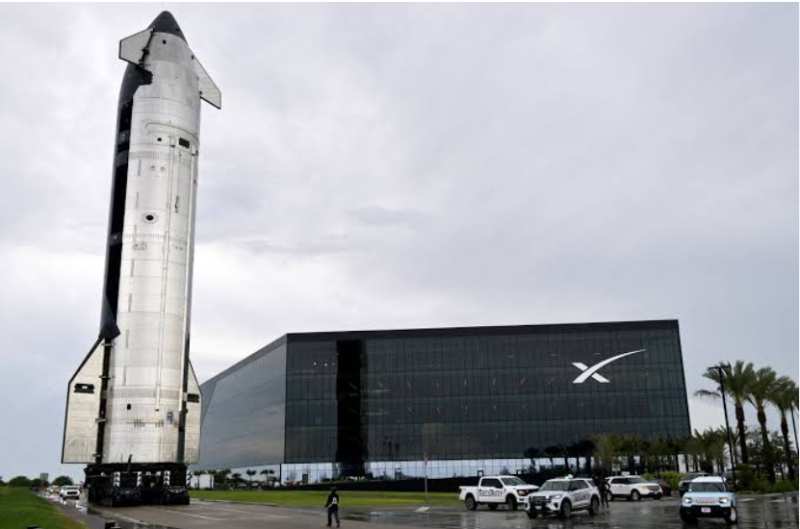
Wall Street financial analysts including representatives from TD Cowen report that aerospace manufacturer SpaceX is evaluating a strategic expansion into orbital computing infrastructure and artificial intelligence power leasing. According to recent market briefings, the company aims to utilize its scaling orbital launch capabilities driven by the maturation of the Starship vehicle to support heavy space-based data centers. This proposed infrastructure development seeks to address severe terrestrial energy grid constraints and data center land limitations currently affecting domestic technology enterprises. Analysts project that leasing extraterrestrial AI computing resources could eventually account for a dominant portion of future corporate revenue. However, financial markets note that the initiative remains at an analytical exploration phase, pending significant technological advancements in orbital thermal dissipation, radiation hardening, and high-bandwidth optical laser communications. Industry observers emphasize that the commercial viability of space-based computation depends directly on achieving reliable, low-cost flight cadences.
By Ayesha A. | JQJO News
Timeline of Events
- On March 14, 2023 SpaceX conducted the first integrated test flight of the Starship rocket.
- On November 18, 2023 SpaceX completed the second integrated flight test of the Starship launch vehicle.
- On March 14, 2024 SpaceX launched the third orbital flight test from Starbase in Texas.
- On June 6, 2024 SpaceX achieved controlled splashdown objectives during the fourth Starship flight test.
- On October 13, 2024 SpaceX successfully captured the Super Heavy booster using launch tower arms.
- On January 16, 2025 financial analysts published preliminary growth forecasts regarding space-based computing infrastructure.
- On April 10, 2025 industry reports highlighted increasing power grid constraints facing terrestrial data center operators.
- On August 22, 2025 market researchers evaluated orbital solar energy collection for high-performance computing systems.
- On February 12, 2026 TD Cowen analysts released updated projections on SpaceX revenue diversification strategies.
- On September 29, 2026 analysts project orbital computing leasing could dominate long-term corporate revenue.
News Intelligence
- Immediate US impact: Technology firms evaluate alternative power strategies amid terrestrial grid constraints.
- Possible long-term US impact: Space infrastructure transforms national artificial intelligence computing capacity and distribution networks.
- Most affected groups: Telecommunications providers, enterprise cloud customers, energy utilities, and aerospace investors.
- Reader priority: Prioritize verified financial analyst reports and official corporate statements over speculation.
Coverage of Story:
From Left
Reimagining data center architecture for the vacuum of space
Fast Company San Francisco ChronicleFrom Center
Wall Street highlights SpaceX potential in artificial intelligence infrastructure
Reuters Bloomberg Financial Times MarketWatch Barron's Forbes The Hill Politico Quartz GeekWire VentureBeat The Register Houston Chronicle Seattle Times Chicago Tribune Miami HeraldFrom Right
Aerospace firm SpaceX looks beyond rockets toward enterprise computing markets
Wall Street Journal Daily Mail Washington Times National Review Online





Comments