MIT Engineers Unveil Muscle-Powered Swimming Robot
PUBLISHED Sep 29, 2026, 2:22 AM ET
Read, Watch or Listen
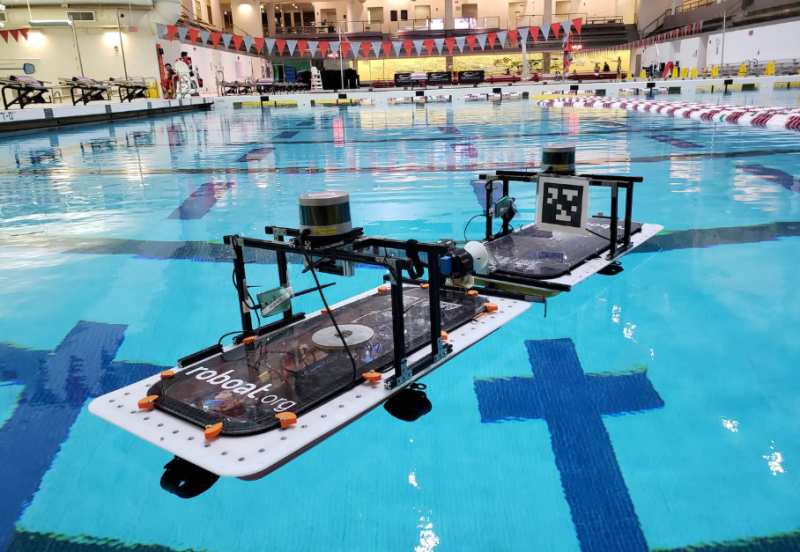
Massachusetts Institute of Technology engineers developed an innovative biohybrid swimming robot powered by living muscle cells. Published in Advanced Functional Materials, the breakthrough demonstrates how microscopic biological tissue generates controlled aquatic propulsion via light activation. Previous soft robotics efforts struggled with restricted tissue movement around one hundred microns. By designing an optimized flexible skeleton, researchers enabled muscle cells to fuse into strong aligned fibers capable of producing functional mechanical force. In laboratory tests, scientists successfully guided the thin swimmer through a watery maze using a targeted light source. While currently limited to preliminary testing, this technology offers significant potential for quiet environmental monitoring. Traditional submersibles rely on noisy propellers that disturb fragile marine ecosystems. Biohybrid swimmers mimic natural aquatic motion, potentially allowing scientists to inspect delicate underwater habitats without causing any ecological disruption. Future development will focus on improving swimming speed, durability, and power efficiency for future field deployment trials.
By Shahbaz A. | JQJO News
Timeline of Events
- On January 10 2023 researchers initiated soft robotic muscle studies.
- On June 15 2023 initial tissue movement tests reached limits.
- On November 20 2023 engineers designed flexible skeletons for cells.
- On March 05 2024 muscle fibers fused into aligned structures.
- On August 12 2024 laboratory testing proved light activation works.
- On October 19 2024 prototype swam through aqueous maze successfully.
- On February 08 2025 research team drafted peer reviewed manuscript.
- On May 14 2025 advanced functional materials journal accepted study.
- On September 01 2025 formal publication released official findings publicly.
- On September 29 2026 experts evaluate future environmental monitoring prospects.
News Intelligence
- Immediate US impact: Researchers explore sustainable soft robotics testing methods right now.
- Possible long-term US impact: Quiet underwater drones may transform marine ecosystem monitoring protocols permanently.
- Most affected groups: Robotics engineers, marine biologists, and environmental science researchers are impacted.
- Reader priority: Monitor academic publications and verify ongoing laboratory testing results carefully.
Coverage of Story:
From Left
MIT biohybrid robot points toward quiet underwater environmental monitoring
Washington Post GizmodoFrom Right
No right-leaning sources found for this story.







Comments