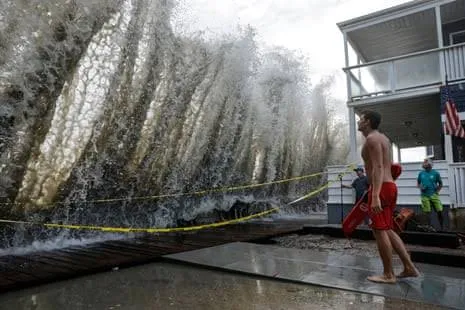
Concern mounts over slow-moving, planetary-scale ‘Kelvin’ wave heading for California
Tap title to read story
Scientists warn that a slow-moving planetary scale Kelvin wave is approaching the California coast amid an exceptionally strong Pacific El Niño. Triggered by shifting trade winds, the massive pulse of warm subsurface water can elevate sea levels by up to a foot for weeks. While the wave does not cause flooding independently, it establishes an elevated baseline for coastal waters. Experts indicate that if this heightened baseline coincides with upcoming seasonal king tides and severe winter storms, coastal communities face a substantially increased risk of severe inundation, rapid beach erosion, and infrastructure damage. Officials are monitoring conditions as winter weather patterns develop across the region.
More context
Timeline
- On October 15 2023 trade winds weakened across the equatorial Pacific Ocean basin.
- On November 10 2023 oceanographers detected initial subsurface warm water anomalies moving eastward.
- On December 05 2023 NOAA issued advisories regarding strengthening El Niño weather conditions.
- On January 20 2024 researchers documented planetary scale Kelvin wave progression patterns.
- On February 14 2024 coastal sensors recorded early baseline sea level anomalies.
- On March 01 2024 winter storms combined with elevated tides impacted California shores.
- On April 10 2024 scientists published observational data tracking warm water propagation.
- On May 22 2024 climate models projected prolonged sea level elevation trends.
- On June 15 2024 state emergency agencies reviewed coastal vulnerability assessment reports.
- On September 28 2026 scientists continue monitoring approaching Kelvin wave coastal impacts.
Why it matters
Immediate US impact: Coastal communities face heightened vulnerability to upcoming winter storm surges. Possible long-term US impact: Accelerated sea level rise prompts permanent coastal infrastructure adaptation planning. Most affected groups: California coastal residents municipal agencies harbor authorities and marine industries. Reader priority: Official National Weather Service advisories and local emergency management updates.
Coverage notes
Left: Highlights climate change connections and long term infrastructure protection needs. Center: Reports meteorological facts regarding ocean wave mechanics and flood risks. Right: Emphasizes immediate municipal preparedness costs and local emergency management readiness.
Primary report
NOAA issued advisory regarding Pacific Kelvin wave on September 28 2026
Sources
- San Francisco Chronicle
- The Guardian
- The New York Times
- The Washington Post
- The Atlantic
- Reuters
- Associated Press
- The Wall Street Journal
- National Public Radio
- Sacramento Bee
- Surfer
- USA Today
- Politico
- Bloomberg
- The Hill
- Time
- Newsweek
- Forbes
- Seattle Times
- Houston Chronicle
- Chicago Tribune
- The Dallas Morning News
- Miami Herald
- The Arizona Republic
- The Oregonian
- The Plain Dealer
- Star Tribune
- The Detroit News
- The Baltimore Sun
- St. Louis Post-Dispatch
- The Oklahoman
- The Salt Lake Tribune
- Kansascity
- The Charlotte Observer
- The Sacramento Bee
- The Fresno Bee
- The Bakersfield Californian
- Las Vegas Review-Journal
- noaa.gov
JQJO Editorial Desk · Human reviewed · AI assisted. Report a correction.