US strikes on Ecuadorian fishing boats raise humanitarian concerns but Trump admin not wavering
Tap title to read story
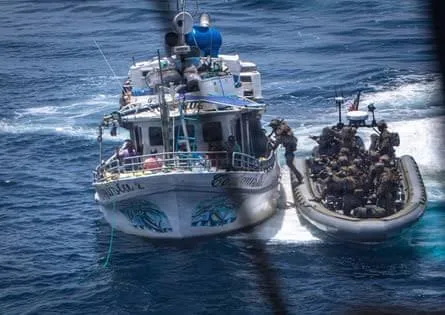
The United States military has escalated counter-narcotics strikes against Ecuadorian fishing vessels accused of serving as floating refueling stations for drug cartels, under joint security agreements authorized by Ecuador President Daniel Noboa. U.S. Secretary of State Marco Rubio defended the kinetic operations during a visit to Quito, asserting that the administration remains willing to destroy vessels when necessary. President Donald Trump has compared drug traffickers to ISIS, advocating for aggressive combatant targeting. Local human rights organizations and legal advocates report severe economic devastation for independent fishers, alongside allegations of extrajudicial actions and arbitrary detentions. United Nations human rights rapporteurs have previously expressed alarm over the military campaign. The U.S. Southern Command maintains that all operations comply with domestic and international laws to prevent criminal networks from repurposing intercepted vessels, while international scrutiny and humanitarian warnings continue to mount regarding the aggressive counter-narcotics strategy in the eastern Pacific region.
More context
Timeline
- On January 15 2024 Ecuador President Daniel Noboa declared internal armed conflict.
- On March 10 2024 bilateral security agreements enabled enhanced maritime military cooperation.
- On May 12 2025 United Nations human rights experts raised preliminary operational concerns.
- On August 04 2025 local advocacy groups documented initial civilian vessel destructions.
- On October 19 2025 U.S. Southern Command affirmed strict adherence to international law.
- On January 08 2026 maritime interdiction operations expanded significantly across eastern Pacific zones.
- On February 14 2026 Secretary of State Marco Rubio visited Quito for talks.
- On February 15 2026 Rubio defended kinetic vessel targeting during official state remarks.
- On September 26 2026 human rights organizations reported ongoing economic devastation for fishers.
- On September 28 2026 the Trump administration maintained unwavering counter-narcotics tactical resolve.
- Future bilateral patrols will continue targeting suspected cartel refueling vessels.
- International legal challenges regarding extrajudicial actions will likely intensify in courts.
Why it matters
Immediate US impact: Strengthened counter-narcotics enforcement reduces regional drug cartel capabilities. Possible long-term US impact: Deepened Andean security alliances could heighten international humanitarian legal disputes. Most affected groups: Ecuadorian fishers, regional families, U.S. military personnel, cartels. Reader priority: Monitor official government statements and verified human rights investigative reports.
Coverage notes
Left: Highlighted humanitarian violations and economic devastation for local fishers. Center: Balanced counter-narcotics security imperatives against rising international humanitarian concerns. Right: Emphasized decisive national security actions against international drug cartels.
Primary report
Secretary of State Marco Rubio defended vessel strikes in Quito.
Sources
JQJO Editorial Desk · Human reviewed · AI assisted. Report a correction.