US, China agree to extend 'the Busan agreement' until January, Bessent says
PUBLISHED Sep 23, 2026, 7:03 PM ET
Read, Watch or Listen
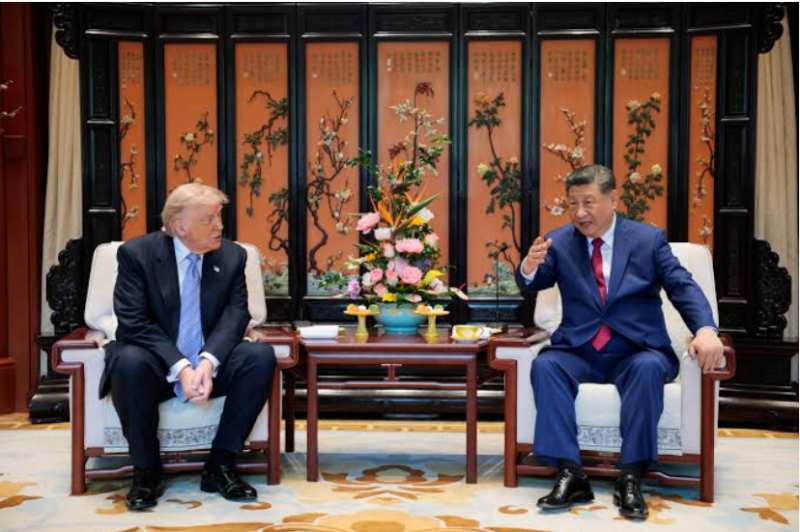
U.S. Treasury Secretary Scott Bessent announced that the United States and China have agreed to extend the economic framework known as the Busan agreement until January 10. The announcement followed high-level discussions in Washington between Bessent and Chinese Vice Premier He Lifeng ahead of a state visit by Chinese President Xi Jinping. The extension postpones the expiration date of the bilateral economic detente, originally set to end on November 10. Bessent stated the move provides both governments additional time to negotiate a broader economic package. The original agreement involved measures such as reduced tit-for-tat tariffs, extended tariff exclusions, and the suspension of actions regarding China's shipbuilding sector. Marathon talks occurred across New York and Washington, coinciding with President Xi Jinping's arrival in the United States for a summit with President Donald Trump.
By Yusra M. | JQJO News
Timeline of Events
- On September 20 2026 Initial high-level bilateral economic talks begin in New York.
- On September 23 2026 Discussions continue in Washington between Treasury Secretary Bessent and Vice Premier He Lifeng.
- On September 24 2026 U.S. Treasury Secretary Scott Bessent announces the extension of the Busan agreement until January 10.
- On January 10 2027 Extended expiration date for the Busan economic framework.
News Intelligence
- Immediate US impact: Postpones potential tariff escalations and provides short-term market stability for bilateral commerce.
- Possible long-term US impact: Creates a window for comprehensive trade negotiations ahead of a presidential summit.
- Most affected groups: U.S. importers, multinational corporations, and supply chain operators.
- Reader priority: High for business owners and investors tracking U.S.-China economic relations.
- Articles Published:
- 30
- Right Leaning:
- 1
- Left Leaning:
- 0
- Neutral:
- 29
- Distribution:
- Left 0%, Center 97%, Right 3%
Left: Framed around potential impacts on consumer costs, market stability, and cautious management of bilateral tensions. Center: Reported as a factual diplomatic and economic update. Right: Framed around strategic economic leverage, national security protections, and administration negotiation strength.
Announcement by U.S. Treasury Secretary Scott Bessent regarding the extension of the Busan agreement. https://www.investing.com/news/world-news/us-china-agree-to-extend-the-busan-agreement-until-january-bessent-says-4914151
Coverage of Story:
From Left
No left-leaning sources found for this story.
From Center
US, China agree to extend 'the Busan agreement' until January, Bessent says
Reuters Associated Press Bloomberg Financial Times Wall Street Journal CNBC CNN BBC News Al Jazeera Politico Axios The Hill New York Times Washington Post Nikkei Asia South China Morning Post NBC News ABC News CBS News USA Today Los Angeles Times Forbes Fortune The Economist France 24 Deutsche Welle CBC News ABC News Australia Straits TimesFrom Right
Treasury Department extends China trade agreement as leadership summit approaches
Fox News

Comments