Tenacious hot springs amoeba sets heat-tolerance record
PUBLISHED Sep 22, 2026, 11:21 AM ET
Read, Watch or Listen
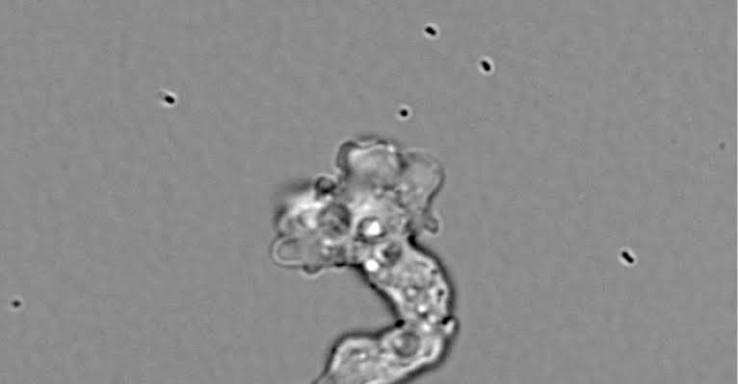
Scientists have discovered a new microscopic amoeba species, Incendiamoeba cascadensis, thriving in hot springs at California Lassen Volcanic National Park. Published in the journal Cell by Syracuse University researchers, the single-celled organism sets a new heat-tolerance record for eukaryotes, performing cellular division at temperatures up to 145.4 degrees Fahrenheit and remaining active up to 147.2 degrees Fahrenheit. Eukaryotes represent complex life containing membrane-bound nuclei, unlike heat-tolerant bacteria or archaea. This species outpaces previous eukaryotic records of roughly 140 degrees Fahrenheit held by specific algae and fungi. As the apex predator in its thermal habitat, the amoeba feeds on heat-loving bacteria while avoiding competition and predators. Researchers noted the organism utilizes shape-shifting, protective outer layers, and enhanced DNA repair gene activity to endure high temperatures. The discovery challenges existing biological assumptions regarding environmental constraints on complex cells, offering new insights into evolutionary biology and expanding scientific parameters for potential life in extreme environments on Earth and throughout the universe.
By Haya | JQJO News
Timeline of Events
- On September 22 2026 researchers published discovery of Incendiamoeba cascadensis in Cell.
- On September 22 2026 Reuters reported on the newly discovered heat-tolerant amoeba.
- On coming months researchers will analyze genetic mechanisms driving extreme thermal endurance.
- On future research astrobiologists will evaluate implications for extraterrestrial life exploration limits.
News Intelligence
- Immediate US impact: Expands scientific understanding of thermal limits for complex lifeforms.
- Possible long-term US impact: Informs astrobiological research parameters regarding extreme extraterrestrial environmental habitability.
- Most affected groups: Biologists, academic researchers, and astrobiology investigators tracking extreme environmental adaptations.
- Reader priority: Prioritize primary peer-reviewed journal publications and verified institutional research announcements.
Left: Insufficient evidence available from collected sources to establish framing. Center: Reports peer-reviewed findings objectively with standard scientific context. Right: Insufficient evidence available from collected sources to establish framing.
Syracuse University researchers published journal study detailing new amoeba species. https://www.reuters.com/science/tenacious-hot-springs-amoeba-sets-heat-tolerance-record-2026-09-22/
Coverage of Story:
From Left
No left-leaning sources found for this story.
From Right
No right-leaning sources found for this story.



Comments