NASA says new Roman telescope's lifespan could more than double, to 22 years
PUBLISHED Sep 19, 2026, 2:51 PM ET
Read, Watch or Listen
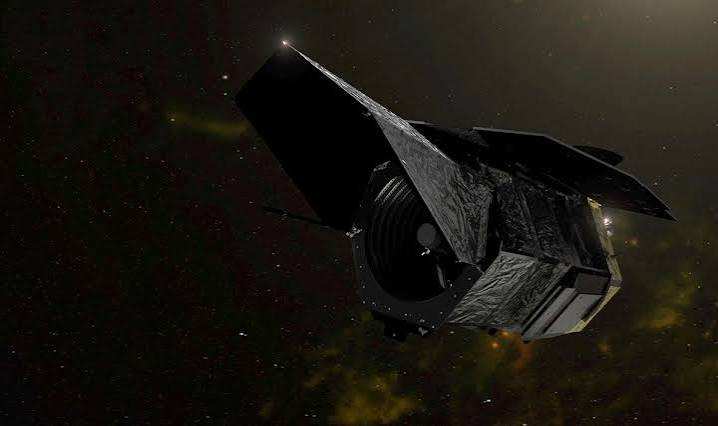
NASA announced that the Nancy Grace Roman Space Telescope could operate for up to 22 years, more than double its initial ten-year projection. The flagship observatory launched on August 30 aboard a SpaceX Falcon Heavy rocket from Cape Canaveral, Florida. NASA officials attributed the potential extension to precise orbital dynamics execution, a successful first mid-course correction that used less than 10 percent of budgeted fuel, and lower-than-expected spacecraft mass during integration that allowed full propellant tank capacity. Currently traveling toward Lagrange Point 2, located one million miles from Earth, the telescope will investigate dark energy, dark matter, and exoplanets. The mission builds on capabilities established by the Hubble and James Webb space telescopes. Jamie Dunn, center director at NASA Goddard Space Flight Center, highlighted the exceptional planning and precise execution behind the milestone. The extended lifespan maximizes scientific return on investment for long-term astrophysical and cosmological investigations.
By Haya | JQJO News
Timeline of Events
- On April 24, 1990, the Hubble Space Telescope launched into orbit.
- On December 25, 2021, the James Webb Space Telescope launched successfully.
- On August 30, 2026, the SpaceX Falcon Heavy launched Roman.
- On September 17, 2026, NASA announced a 22-year potential telescope lifespan.
- On September 17, 2026, officials detailed fuel savings from first course correction.
- On September 18, 2026, media coverage highlighted extended mission operational capabilities.
- On September 19, 2026, engineering teams prepared for upcoming second mid-course correction maneuvers.
- In coming months, NASA engineers will complete crucial orbital insertion procedures.
- Over the next decade, the observatory will commence primary scientific data collection.
- Throughout the 2040s, the extended mission will investigate cosmic dark energy.
News Intelligence
- Immediate US impact: Enhanced space research capabilities strengthen United States technological leadership globally.
- Possible long-term US impact: Extended cosmic observation data transforms long-term astrophysics and cosmology research.
- Most affected groups: American aerospace researchers, NASA facilities, and astrophysics academic institutions.
- Reader priority: Track official NASA announcements and primary space science research publications.
- Articles Published:
- 15
- Right Leaning:
- 1
- Left Leaning:
- 2
- Neutral:
- 12
- Distribution:
- Left 13%, Center 80%, Right 7%
Left: Emphasizes public scientific funding efficiency and technological collaboration achievements. Center: Reports official agency fuel metrics and mission milestones neutrally. Right: Focuses on aerospace engineering success and American technological supremacy.
NASA Goddard Space Flight Center announced potential twenty-two year lifespan on September 17 2026. https://www.reuters.com/science/nasa-says-new-roman-telescopes-lifespan-could-more-than-double-22-years-2025-09-17/
Coverage of Story:
From Left
Precise Launch and Light Weight Give NASA Telescope a 22-Year Lease on Life
New York Times GizmodoFrom Center
NASA says new Roman telescopes lifespan could more than double to 22 years
Reuters Chosun Daily ScienceDaily Jalopnik Global Banking and Finance Review BigGo Finance Newsflare Associated Press Bloomberg Washington Post Science Magazine Forbes





Comments