Noncitizens accused of illegal US voting challenge Trump's authority to prosecute them
PUBLISHED Sep 16, 2026, 12:25 PM ET
Read, Watch or Listen
Defendants in federal courts across Florida and Wisconsin are challenging the constitutionality of the 1996 Illegal Immigration Reform and Immigrant Responsibility Act statute criminalizing noncitizen voting. Five defendants, including green card holders accused of illegal voting in federal elections, argue that Article I and Article II of the U.S. Constitution reserve voter qualification and prosecution powers exclusively to individual states rather than federal prosecutors. The Department of Justice maintains that Congress holds statutory authority over immigration and foreign influence in elections, arguing that striking down the law could endanger federal protections for overseas voters. A Reuters analysis revealed only 129 people have been charged under the federal law in 30 years, mostly legal residents mistaken about eligibility. Historically resulting in minor fines, charges now carry heightened deportation risks under aggressive administration enforcement policies. Decisions on motions to dismiss are expected prior to the November 2026 midterm elections.
By Haya | JQJO News
Timeline of Events
- On September 30, 1996 Congress enacts federal statute criminalizing noncitizen voting.
- On September 9, 2022 Wilner Renaud votes mistakenly believing naturalization conferred citizenship status.
- On March 15, 2026 Christian Erazo Valdez files first constitutional challenge in Wisconsin.
- On July 19, 2026 Reuters analysis finds 129 noncitizen voting charges in 30 years.
- On August 20, 2026 Canadian citizen Gaynell Jeffries acquitted in nonjury trial Florida.
- On September 9, 2026 Judge Becerra rejects constitutional dismissal argument in Miami court.
- On September 15, 2026 (3:03 PM GMT+5) Judge Leibowitz hears oral arguments regarding Jamaican Chelsea Cox.
- On September 15, 2026 (3:03 PM GMT+5) Jury acquits defendant Wilner Renaud of illegal voting charge.
- On October 5, 2026 First trial featuring constitutional defense argument is set.
- On December 14, 2026 Final scheduled federal trial on noncitizen voting begins.
News Intelligence
- Immediate US impact: Federal judges test federal limits regarding state voter qualification enforcement.
- Possible long-term US impact: Landmark rulings could restrict federal authority over state election oversight.
- Most affected groups: Legal permanent residents, noncitizen immigrants, federal prosecutors, state election boards.
- Reader priority: Track upcoming federal judicial rulings prior to the midterm elections.
- Articles Published:
- 38
- Right Leaning:
- 8
- Left Leaning:
- 6
- Neutral:
- 24
- Distribution:
- Left 16%, Center 63%, Right 21%
Left: Highlights deportation threats and rarity of illegal noncitizen voting. Center: Focuses objectively on constitutional arguments and judicial precedent. Right: Emphasizes federal election integrity and congressional oversight authority.
Reuters report by Tom Hals detailing federal voting court challenges. https://www.reuters.com/legal/government/noncitizens-accused-illegal-us-voting-challenge-trumps-authority-prosecute-2026-09-15/
Coverage of Story:
From Left
Noncitizen defendants push back against Trump voting crackdown in federal court
Politico NBC News Washington Post New York Times HuffPost Immigration ImpactFrom Center
Noncitizens accused of illegal US voting challenge Trump's authority to prosecute them
Reuters Associated Press Wall Street Journal The Hill USA Today Bloomberg Law Miami Herald Milwaukee Journal Sentinel Chicago Tribune Dallas Morning News Arizona Republic Detroit Free Press Newsweek The Federal Voice Orlando Sentinel Sun Sentinel Wisconsin State Journal Palm Beach Post Tallahassee Democrat The Florida Times-Union Green Bay Press-Gazette El Nuevo Herald States Newsroom National Association of Election OfficialsFrom Right
Federal prosecutors defend oversight of foreign voters in federal court
Las Vegas Review-Journal Washington Times Daily Wire The Texan Heritage Foundation CATO Institute Federalist Society Center for Immigration Studies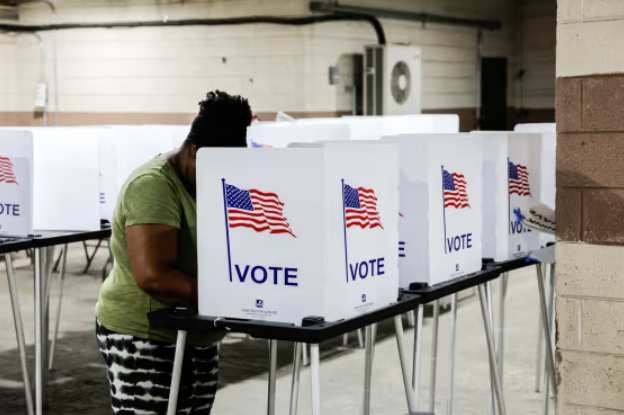





Comments