House Votes to Limit Trump's Iran War Powers for the Third Time
PUBLISHED Sep 15, 2026, 10:54 PM ET
Read, Watch or Listen
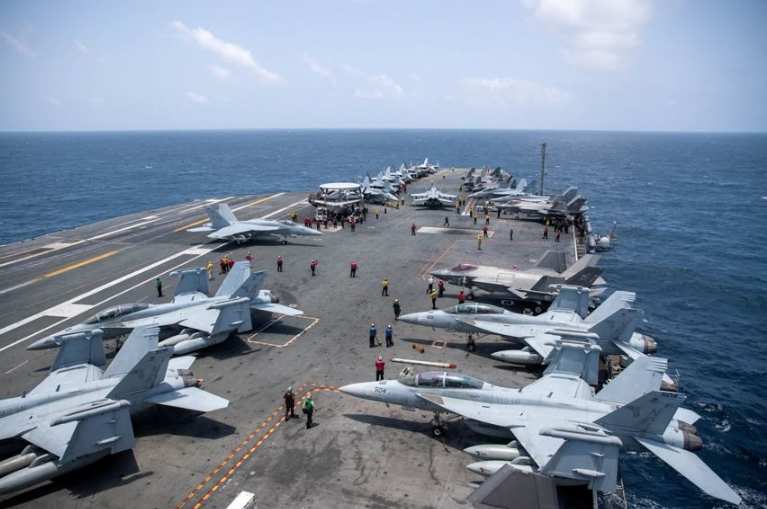
The United States House of Representatives voted late Tuesday to approve a bipartisan war powers resolution aimed at halting military operations against Iran without congressional authorization. The legislation passed by a 220-204 margin, marking the third time the lower chamber has advanced such a measure as the conflict extends. Seven Republican lawmakers crossed party lines to support the resolution, an increase from previous votes. Under Article I of the U.S. Constitution, Congress holds the exclusive power to declare war, while the 1973 War Powers Resolution requires presidential authorization for sustained hostilities past sixty to ninety days. House Speaker Mike Johnson defended the administration's ongoing strategy, noting that regional stabilization efforts are progressing and that global energy prices remain tied to Middle East developments. The resolution now moves to the Senate, where previous legislative efforts faced strict partisan division and procedural hurdles. Administration officials maintained that current military actions fall under essential national security protocols.
By Yusra M. | JQJO News
Timeline of Events
- On March 3, 2026, military conflict between the United States and Iran began.
- On June 3, 2026, the House approved a war powers resolution for the first time.
- On July 23, 2026, the House passed a second resolution seeking to halt hostilities.
- On September 15, 2026, the House approved the war powers resolution a third time.
- On September 15, 2026, seven Republicans voted in favor, increasing cross-party support.
- On September 15, 2026, House Speaker Mike Johnson defended the administration's regional strategy.
- On September 16, 2026, Senate Democratic leadership scheduled upcoming floor debates on the measure.
- In coming days, Senate legislators will debate the House-passed war powers resolution.
- In coming weeks, congressional leaders will assess veto-override thresholds if necessary.
- In coming months, midterm election campaigns will feature debates over executive war powers.
News Intelligence
- Immediate US impact: Federal lawmakers challenge executive war authority amid ongoing Middle East conflict.
- Possible long-term US impact: Prolonged military engagement could influence congressional oversight and upcoming midterms.
- Most affected groups: Federal legislators, military personnel, and American energy consumers nationwide.
- Reader Priorities: Monitor congressional updates, floor votes, and official legislative statements closely.
- Articles Published:
- 29
- Right Leaning:
- 4
- Left Leaning:
- 6
- Neutral:
- 19
- Distribution:
- Left 21%, Center 66%, Right 14%
Left: Emphasized constitutional checks and congressional pushback against executive war authority. Center: Reported legislative vote counts, bipartisan shift, and procedural next steps objectively. Right: Highlighted national security priorities and presidential negotiating leverage during regional conflicts.
House passed third war powers resolution limiting Iran military actions. https://apnews.com/article/iran-war-powers-resolution-8519dae8197214b4edf2192e174c82f4
Coverage of Story:
From Left
US House passes largely symbolic vote ordering end to Iran war
The New Arab CNN Washington Post New York Times MSNBC NPRFrom Center
House votes for a third time to end the Iran war as conflict drags on
Associated Press CBS News KRDO Newsday U.S. House of Representatives Local News 8 RFE/RL Reuters The Hill Politico USA Today NBC News ABC News Bloomberg Financial Times Time Axios Politico Pro Congressional RecordFrom Right
House Republicans Debate War Powers and National Security Priorities
Fox News Wall Street Journal National Review The Washington Times





Comments