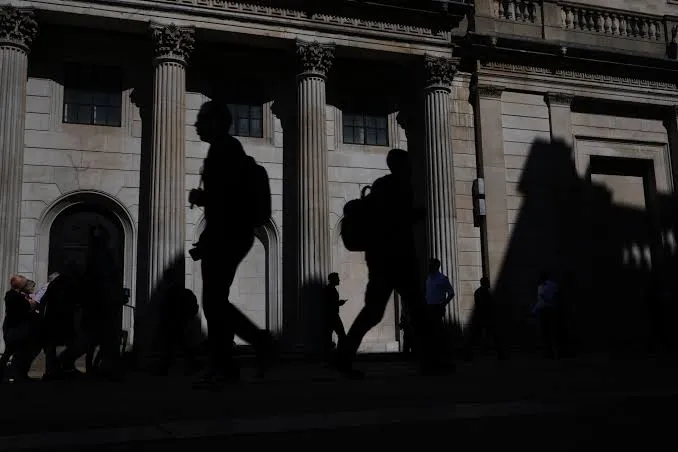
UK inflation rises to 5-month high, further pressuring Bank of England to raise rates this year
Tap title to read story
UK headline consumer price inflation climbed to a five-month high of 3.1% in the 12 months to August, up from 2.9% in July, driven primarily by soaring energy, transport, and motor fuel costs stemming from global supply pressures. The Office for National Statistics reported that the increase moved inflation further away from the Bank of England target of 2%. While core and services inflation remained relatively contained, the stronger-than-expected headline figure has heightened pressure on the Bank of England Monetary Policy Committee. Although interest rates were widely anticipated to be held steady in the short term at 3.75%, financial markets are increasingly pricing in the likelihood of additional rate hikes heading into late 2025 and 2026. This dynamic poses continuing financial challenges for households, consumers, and mortgage holders facing higher borrowing costs and a sustained cost-of-living squeeze driven by ongoing geopolitical tensions impacting international energy markets.
More context
Timeline
- On February 28 2026 Middle East conflict erupted following sudden attacks affecting energy markets.
- On May 19 2026 UK inflation slowed to 2.8 percent as energy caps cushioned impacts.
- On June 16 2026 UK inflation remained stable at 2.8 percent amid mixed sectoral pressures.
- On July 21 2026 UK inflation fell unexpectedly to 2.6 percent providing temporary relief.
- On July 26 2026 Economists warned that rising oil prices could force higher rates.
- On August 19 2026 UK inflation rose to 2.9 percent as energy bills climbed.
- On September 15 2026 Labor market data showed wage growth remaining close to recent lows.
- On September 16 2026 Office for National Statistics reported August inflation hitting 3.1 percent.
- On September 17 2026 Bank of England announced its widely expected interest rate decision.
- On October 28 2026 UK government budget update expected to address fiscal discipline challenges.
Why it matters
Immediate US impact: Minimal direct effect on domestic US monetary policy. Possible long-term US impact: Shared global energy pressures influence cross-border market sentiment. Most affected groups: UK households, mortgage holders, transport workers, and energy consumers. Reader priority: Monitor official ONS data releases and central bank announcements.
Coverage notes
Left: Emphasizes hardships for working households and government spending budget pressures. Center: Focuses strictly on statistical data releases and market rate expectations. Right: Emphasizes fiscal discipline and market mechanisms against external supply shocks.
Primary report
Office for National Statistics published August inflation data at 06:00 GMT.
Sources
- The Guardian
- The National
- Financial Times
- Reuters
- The Independent
- Sky News
- Bloomberg
- Wall Street Journal
- Financial News
- Standard
- Morningstar
- FXStreet
- Business Recorder
- Reuters UK
- ITV News
- Belfast Telegraph
- The Scotsman
- Herald Scotland
- Property Wire
- The Retail Bulletin
- Fleet News
- Travel Weekly
- UKTN
- The Banker
- Reuters Markets
- Trading Economics
- Investing.com UK
- The Times
- Daily Mail
- The Sun
JQJO Editorial Desk · Human reviewed · AI assisted. Report a correction.