Global clean hydrogen investment tops $130 billion amid energy security push, council says
Tap title to read story
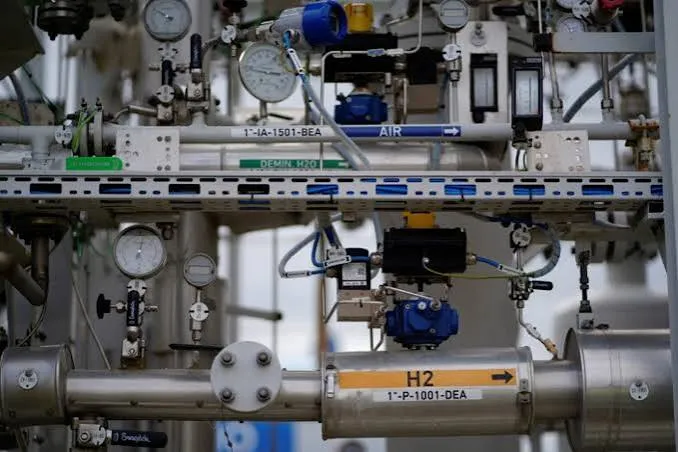
Global cumulative investment in clean hydrogen projects has surpassed $130 billion across more than 570 committed developments worldwide, according to a report by the Hydrogen Council released alongside the Hydrogen Energy Ministerial Meeting in Tokyo. The findings indicate that approximately 90% of these committed projects are operational or actively under construction, supporting an estimated 6.9 million metric tons of annual production capacity. Governments increasingly view clean hydrogen as a crucial mechanism for energy security and industrial expansion in addition to long-term decarbonization goals. Geographically, China controls over half of global committed renewable hydrogen capacity, Europe leads in overall investment, and the United States leads in low-carbon deployment. Despite strong public policy support that could back 11 million tons of annual demand by 2030, high equipment costs, elevated interest rates, and uncertain off-taker demand have led developers to delay or cancel several commercial-scale green hydrogen ventures.
More context
Timeline
- On 2020-07-08 EU launched its comprehensive hydrogen strategy to boost capacity.
- On 2021-11-15 US passed Bipartisan Infrastructure Law allocating hydrogen hub funding.
- On 2022-03-23 China announced medium long-term plan for clean hydrogen industry.
- On 2022-08-16 US enacted Inflation Reduction Act with hydrogen production tax credits.
- On 2023-12-22 US Treasury released proposed guidance on clean hydrogen tax credits.
- On 2026-09-10 Hydrogen Council released Global Hydrogen Compass report in Tokyo.
- On 2026-09-10 Global clean hydrogen investments officially crossed the 130 billion threshold.
- On 2026-09-10 90 percent of committed clean hydrogen projects reached construction phase.
- On 2026-09-13 Developers continue adjusting project capital allocations amid persistent market costs.
- On December 31 2030 Expected by 2030-12-31 Enacted government policies could drive 6 million tons hydrogen demand.
Why it matters
Immediate US impact: US maintains leadership in low-carbon hydrogen technology deployment funding. Possible long-term US impact: High capital costs may slow industrial adoption across domestic markets. Most affected groups: Energy project developers, heavy industrial manufacturers, and clean-tech investors. Reader priority: Track federal tax credit finalization and off-taker purchase commitments.
Coverage notes
Left: Emphasizes environmental necessity of subsidies to replace fossil fuels rapidly. Center: Focuses on capital expenditure metrics, market hurdles, and regional deployment. Right: Highlights high costs, project cancellations, and reliance on government subsidies.
Primary report
Hydrogen Council published Global Hydrogen Compass 2026 report in Tokyo.
Sources
- Politico Pro
- San Francisco Chronicle
- Seattle Times
- Reuters
- Hydrogen Council
- PR Newswire
- ESG News
- Enlit World
- Illuminem
- Anadolu Agency
- The Sustainability Grid
- Bloomberg
- Financial Times
- Energy Voice
- S&P Global Commodity Insights
- Wall Street Journal
- MarketWatch
- Associated Press
- Barron's
- Carbon Pulse
- Power Engineering International
- Smart Energy International
- H2 View
- Fuel Cells Bulletin
- Le Monde in English
- Japan Times
- Straits Times
- Australian Financial Review
- Houston Chronicle
- Dallas Morning News
- Chicago Tribune
- Miami Herald
- Wall Street Journal Opinion
- The Daily Caller
JQJO Editorial Desk · Human reviewed · AI assisted. Report a correction.