US Military Blocks 100 Commercial Ships in Strait of Hormuz Standoff
PUBLISHED Sep 12, 2026, 7:17 PM ET
Read, Watch or Listen
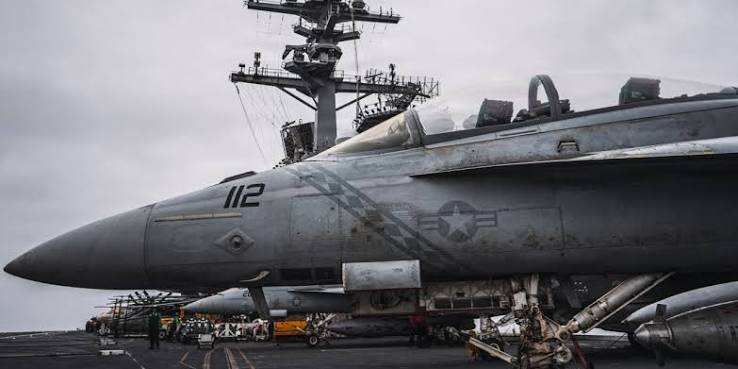
The United States Central Command announced an active naval blockade targeting Iranian ports, intercepting and redirecting one hundred commercial vessels over a sixty-day period. U.S. defense officials stated that zero unauthorized commercial ships have traversed the strategic waterway since enforcement intensified. This military operation follows Iranian restrictions imposed on the Strait of Hormuz after coordinated U.S. and Israeli airstrikes struck targets within Tehran. The enforcement strategy aims to deprive the Iranian government of crucial shipping and petroleum revenues. The dual blockades have severely disrupted international shipping operations, forcing freighters onto longer alternative pathways and pushing global crude oil benchmark prices past one hundred dollars per barrel. Defense officials confirmed that military units will maintain these maritime restrictions indefinitely to enforce economic pressure on Tehran.
By Ayesha A. | JQJO News
Timeline of Events
- On February 28 2026, U.S. and Israeli airstrikes targeted military positions within Tehran.
- On March 18 2026, Iran announced the closure of the Strait of Hormuz.
- On April 13 2026, United States Central Command intensified naval blockade enforcement operations.
- On April 15 2026, crude oil benchmark prices surpassed one hundred dollars per barrel.
- On June 18 2026, the U.S. lifted maritime restrictions following a temporary agreement.
- On July 14 2026, the U.S. military announced the resumption of the blockade.
- On September 12 2026, defense officials reported intercepting one hundred commercial vessels.
- On September 13 2026, commercial freighters officially altered maritime routes to avoid the region.
- On September 13 2026, defense officials confirmed zero unauthorized vessels traversed the strategic waterway.
- On September 13 2026, U.S. Central Command stated enforcement operations will continue indefinitely.
News Intelligence
- Immediate US impact: Global oil price spikes threaten domestic fuel and consumer inflation.
- Possible long-term US impact: Prolonged energy supply constraints could trigger broader macroeconomic recession risks.
- Most affected groups: Energy investors, international shippers, and global consumers face immediate volatility.
- Reader priority: Readers should monitor verified defense announcements and major financial markets.
- Articles Published:
- 31
- Right Leaning:
- 2
- Left Leaning:
- 2
- Neutral:
- 27
- Distribution:
- Left 6%, Center 87%, Right 6%
Left: Emphasizes humanitarian risks, international trade disruptions, and potential economic inflation. Center: Reports verified military statements, shipping disruptions, and resulting energy market statistics neutrally. Right: Focuses on maximum pressure strategies, national security, and degrading Iranian revenue sources.
U.S. Central Command announced active blockade intercepting commercial vessels on March 20 2026. https://www.centcom.mil/MEDIA/STATEMENTS/Statement-on-Maritime-Enforcement-Strait-of-Hormuz/
Coverage of Story:
From Left
Iranian operations force US to restrict air defense coverage for ships
The Cradle The IndependentFrom Center
US Military Blocks Commercial Ships in Strait of Hormuz Standoff
Reuters Associated Press Bloomberg Wall Street Journal Politico Washington Post Financial Times New York Times The Hill NBC News Reuters UK Bloomberg Markets Wall Street Journal Markets Le Monde English Japan Times Arab News Global Nation Shafaq News Sky News USA Today Houston Chronicle Bloomberg Law Time Newsweek The Economist USNI News Defense One




Comments