OpenAI AI Model Solves Navier-Stokes Millennium Math Problem
PUBLISHED Sep 8, 2026, 8:17 PM ET
Read, Watch or Listen
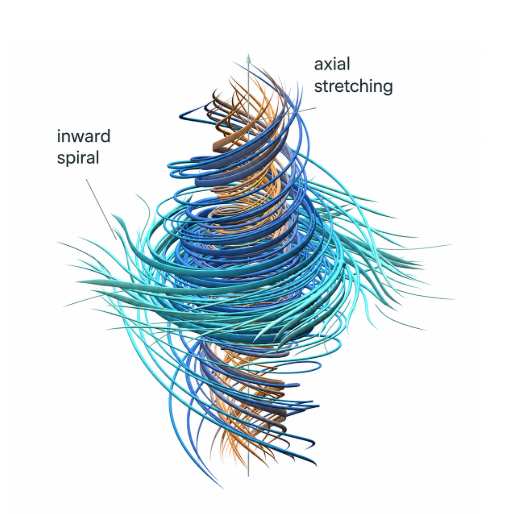
OpenAI announced that an advanced unreleased artificial intelligence model solved the Navier-Stokes existence and smoothness problem, one of seven Millennium Prize Problems established by the Clay Mathematics Institute. Approximately 10,000 autonomous AI agents operating in parallel completed the solution over an 88-hour period, utilizing heavy computational resources. The proof demonstrates that three-dimensional Navier-Stokes equations modeling fluid dynamics can develop a singularity in finite time. OpenAI published both the analytical proof and a machine-verified formalization written in Lean. The announcement drew immediate attention and a priority dispute from New York University mathematician Tristan Buckmaster and Levent Alpöge, a researcher at Anthropic. Buckmaster stated that OpenAI accelerated its research after discovering that he and Alpöge were near a breakthrough on related equations, and questioned whether OpenAI utilized user data from their interactions with OpenAI services. OpenAI denied accessing private user data or unpublished preprints, maintaining that its internal model achieved results independently.
By Sarah Whitman | JQJO News
Timeline of Events
- On May 24, 2000, the Clay Institute announced Millennium problems.
- On August 28, 2026, OpenAI initiated training for new models.
- On September 1, 2026, OpenAI evaluated open Millennium mathematical problems.
- On September 8, 2026, OpenAI announced the Navier-Stokes proof publicly.
- On September 8, 2026, researchers released analytical and Lean proofs.
- On September 8, 2026, mathematician Tristan Buckmaster raised priority disputes.
- On September 8, 2026, OpenAI denied utilizing non-public user data.
- On September 9, 2026, independent mathematicians began reviewing formal proofs.
- On September 9, 2026, scientific communities debated advanced AI capabilities.
- In coming months, global mathematicians will thoroughly audit the proofs.
News Intelligence
- Immediate US impact: Boosts American artificial intelligence credibility in advanced scientific research applications.
- Possible long-term US impact: Accelerates automated mathematical discovery across global academic and corporate laboratories.
- Most affected groups: Mathematicians, artificial intelligence researchers, technology companies, and academic institutions nationwide.
- Reader Priorities: Monitor primary preprint servers and independent peer-review academic responses closely.
- Articles Published:
- 25
- Right Leaning:
- 2
- Left Leaning:
- 3
- Neutral:
- 20
- Distribution:
- Left 12%, Center 80%, Right 8%
Left: Emphasizes corporate competition, data controversy, and ethical safety questions raised. Center: Focuses on technical mechanics, agent swarms, and mathematical verification details. Right: Highlights technological dominance, market valuation potential, and scientific advancement speed.
On September 8, 2026, OpenAI published a blog announcing proof. https://openai.com/index/navier-stokes-solution/
Coverage of Story:
From Left
OpenAI claims to have solved maths problem that stumped humans for decades
The Guardian The Verge CNNFrom Center
OpenAI claims solution to one of math s 1 million Millennium Prize problems
The Washington Post Engadget Anadolu Agency Tribune Pakistan OpenAI Developer Community Pluang News TechCrunch Ars Technica Wired Bloomberg Reuters Financial Times MIT Technology Review ZDNET VentureBeat InfoWorld CNET Fast Company Fortune BBC News





Comments