Sudan’s war-driven blackouts push residents toward solar power but high costs shut many out
PUBLISHED Sep 6, 2026, 11:27 AM ET
Read, Watch or Listen
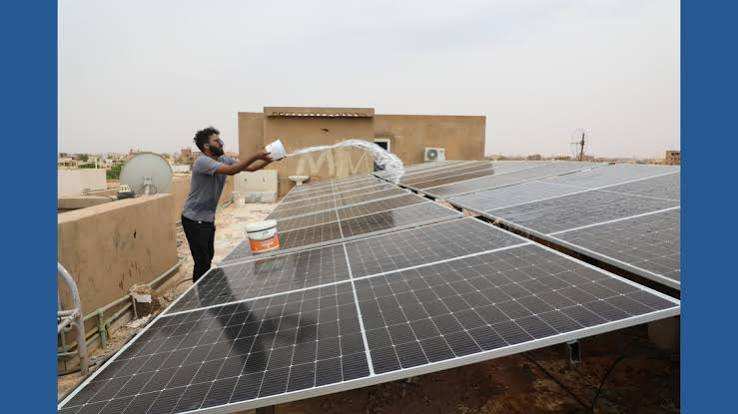
Ongoing conflict between the Sudanese military and the paramilitary Rapid Support Forces has severely damaged the national electricity grid, triggering widespread and recurrent blackouts across the country. The United Nations Development Program estimates grid damages at three billion dollars since fighting erupted in April 2023. With extreme summer temperatures worsening conditions, urban residents increasingly turn to rooftop solar panels, batteries, and inverters for reliable energy. However, high equipment costs prevent most citizens from accessing alternative power solutions. Many households relying on solar systems depend on financial remittances sent by family members working abroad. The deepening energy divide leaves vulnerable populations without basic climate control or stable conditions for daily survival and children's education as the humanitarian crisis expands.
By Emily Rhodes | JQJO News
Timeline of Events
- On April 15, 2023, military and paramilitary forces began armed conflict across Sudan.
- On May 1, 2023, nationwide electricity infrastructure suffered severe structural damage from fighting.
- On June 1, 2023, escalating blackouts disrupted urban water supplies and daily survival.
- On January 1, 2024, international organizations assessed grid damage at three billion dollars.
- On June 1, 2024, extreme summer temperatures intensified civilian demand for backup power.
- On January 1, 2025, commercial solar panel billboards expanded significantly throughout Khartoum streets.
- On June 1, 2025, remittance dependence grew as families sought private solar installations.
- On January 1, 2026, high equipment costs locked out impoverished residents from solar.
- On June 1, 2026, recurring grid failures persisted across major urban residential neighborhoods.
- On September 6, 2026, solar adoption remained constrained by prohibitive market prices nationwide.
News Intelligence
- Immediate US impact: Immediate US impact remains minimal regarding direct domestic energy supply disruptions.
- Possible long-term US impact: Long-term US impact involves increased humanitarian assistance and refugee support funding.
- Most affected groups: Most affected groups include displaced Sudanese civilians and urban households lacking capital.
- Reader priority: Readers should prioritize verified wire reports and international development agency updates.
- Articles Published:
- 34
- Right Leaning:
- 3
- Left Leaning:
- 5
- Neutral:
- 26
- Distribution:
- Left 15%, Center 76%, Right 9%
Left: Highlighted humanitarian suffering, climate vulnerability, and inequality in access. Center: Focused on factual infrastructure damage, economic costs, and adoption statistics. Right: Emphasized regional security dynamics, remittance reliance, and private market adaptation.
Associated Press published report on Sudanese solar adoption on September 6, 2026. https://apnews.com/article/sudan-electricity-solar-war-infrastructure-3233f74770f431f06c94dc5c3d34d15f
Coverage of Story:
From Left
Millions locked out of solar power in blackout-hit Sudan
Independent Washington Post New York Times San Francisco Chronicle Toronto StarFrom Center
Sudan war blackouts push residents toward solar power
Associated Press Reuters Bloomberg Associated Press of Pakistan Radio Dabanga Africanews Sudan Tribune Cairo Post Eastleigh Voice North Africa Post RatoPati News Channel Nebraska NPR USA Today Miami Herald Chicago Tribune Houston Chronicle Seattle Times Dallas Morning News CBC News Global News Sky News Euronews Politico Financial Times Straits TimesFrom Right
Sudan power grid collapse accelerates private sector solar investments
Wall Street Journal Daily Mail Sun





Comments