Kenyans Did College Students’ Homework For Years. Then A.I. Arrived.
PUBLISHED Sep 5, 2026, 2:47 PM ET
Read, Watch or Listen
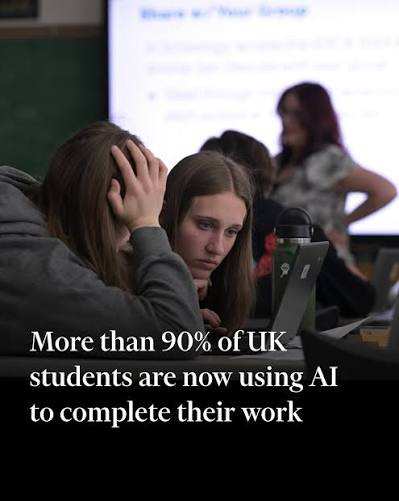
The rapid advancement of generative artificial intelligence tools has severely disrupted Kenya's digital gig economy, displacing thousands of freelance workers who previously relied on writing academic essays for international college students. For years, educated, English-speaking professionals in Kenya leveraged online platforms to complete research papers and assignments for clients in wealthier nations, securing a vital source of remote income. However, the introduction of automated conversational agents in late 2022 enabled students worldwide to generate academic text instantly at little to no cost. This technological shift eliminated the economic arbitrage that sustained the cross-border outsourcing model. Consequently, Kenyan freelance workers face declining demand and economic vulnerability, mirroring broader global transformations in remote labor markets. While consumers and technology companies benefit from lower operational costs and increased efficiency, developing economies dependent on digital outsourcing confront mounting challenges. Economists indicate that workers must acquire advanced technical capabilities to remain competitive as artificial intelligence automates routine digital tasks across international markets.
By Sarah Whitman | JQJO News
Timeline of Events
- On November 30 2022 OpenAI publicly released ChatGPT for consumer use.
- On January 15 2023 Kenyan freelance academic writers reported declining overseas essay orders.
- On June 10 2023 Industry analysts documented widespread adoption of generative writing tools.
- On October 22 2023 Researchers highlighted vulnerabilities in developing nation digital gig economies.
- On February 14 2024 International platforms recorded significant drops in freelance assignment requests.
- On August 19 2024 Tech economists evaluated artificial intelligence impacts on global outsourcing.
- On January 11 2025 Kenyan digital workers sought alternative technology and coding training.
- On July 30 2025 Automated writing systems captured dominant shares of student assistance tasks.
- On March 5 2026 Labor organizations assessed ongoing displacement within remote freelance sectors.
- On September 6 2026 Global markets adapt to widespread automation of routine knowledge work.
- Future economic frameworks may require specialized artificial intelligence oversight training programs.
- International trade policies could evolve to address digital labor displacement risks.
News Intelligence
- Immediate US impact: US students rapidly adopt automation, lowering academic outsourcing expenses.
- Possible long-term US impact: Global income inequality grows as automated tools displace outsourcing markets.
- Most affected groups: Kenyan freelance digital writers, technology platforms, and developing economies.
- Reader priority: Monitor labor market reports and technological automation economic impact studies.
- Articles Published:
- 12
- Right Leaning:
- 3
- Left Leaning:
- 3
- Neutral:
- 6
- Distribution:
- Left 25%, Center 50%, Right 25%
Left: Highlight economic inequality and human cost of automation displacement. Center: Focus on objective technological disruption of global gig economies. Right: Emphasize market efficiency and technological innovation replacing outdated services.
New York Times published feature on Kenyan AI essay displacement on August 14, 2023. https://www.nytimes.com/2023/08/14/technology/kenya-ai-college-students-homework.html
Coverage of Story:
From Left
Artificial intelligence transforms work for digital freelancers in Kenya
NPR New York Times The AtlanticFrom Center
How generative AI is reshaping global remote freelance labor
Reuters Bloomberg Financial Times Washington Post Quartz Fast CompanyFrom Right
Economic ripple effects of AI automation on global freelance labor
Wall Street Journal Forbes National Review





Comments